


Composite plate
BDF Underground Water Tanks
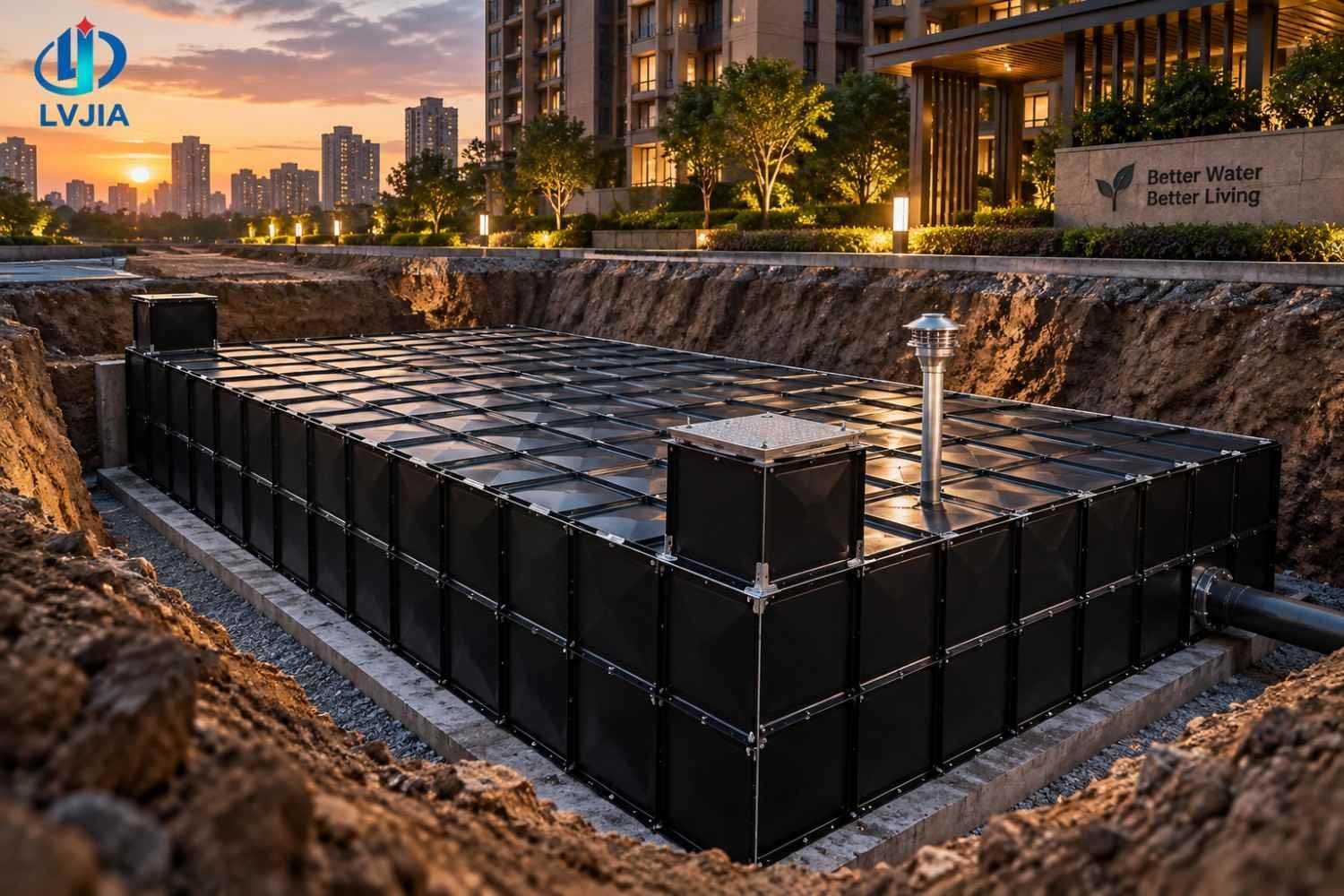
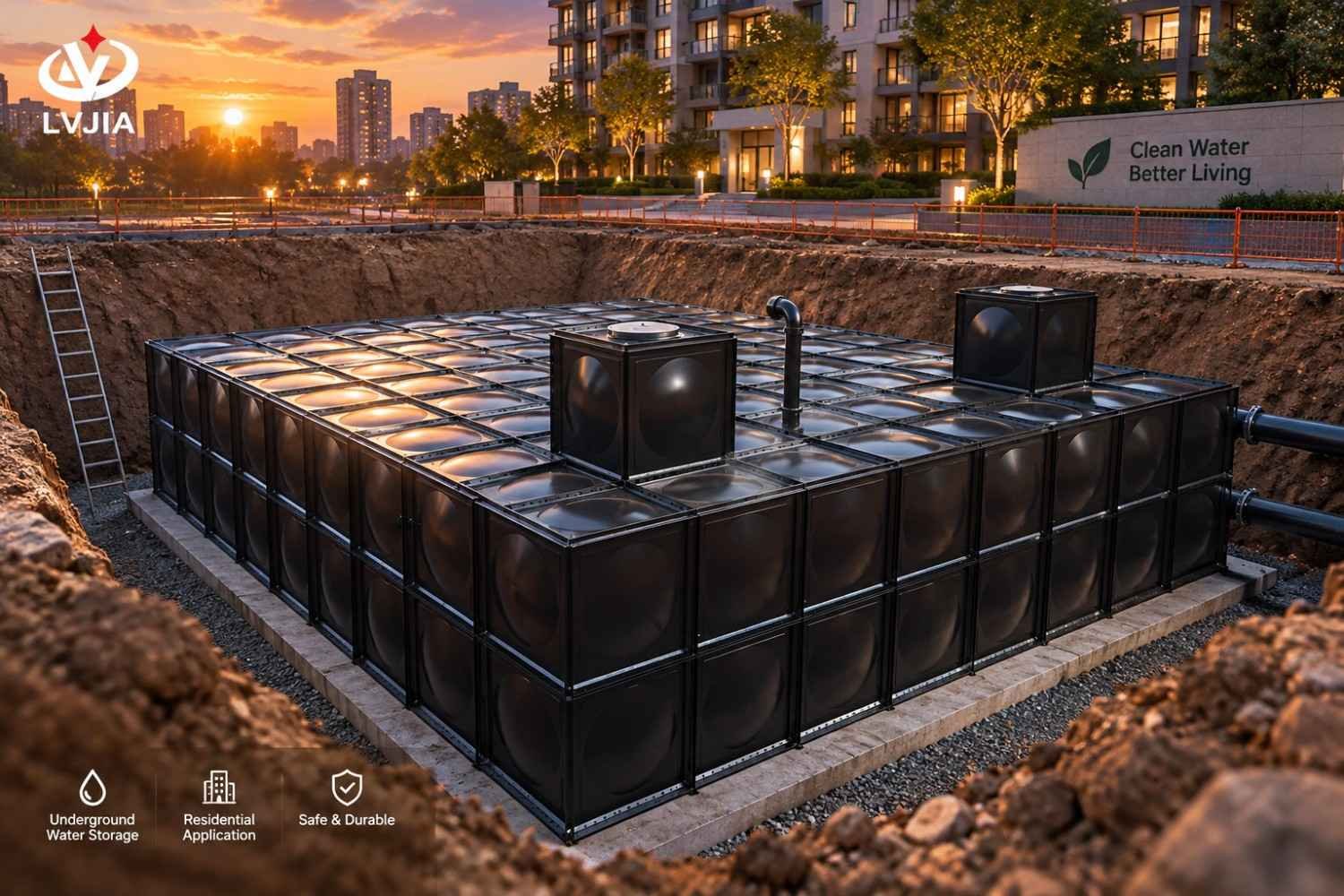
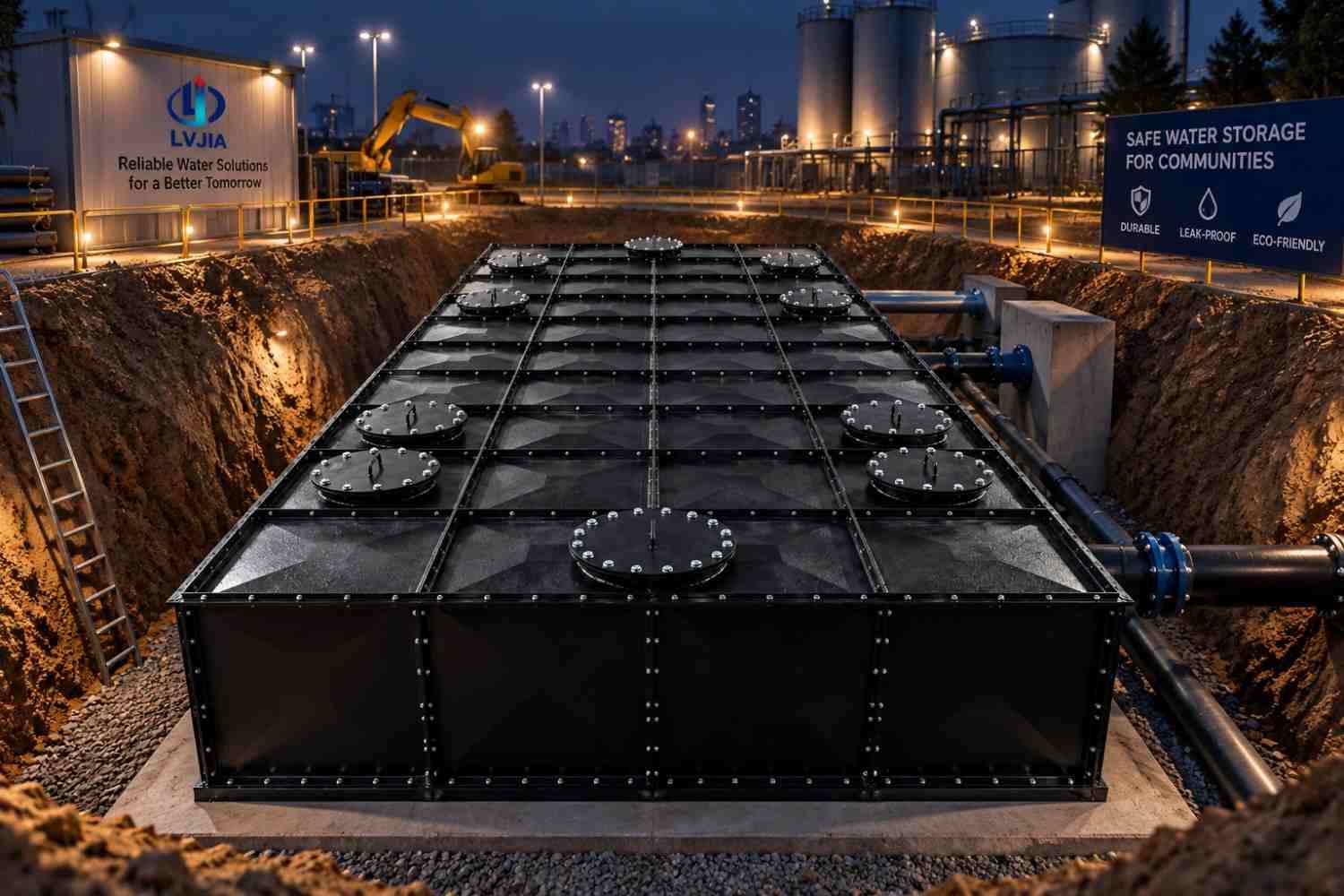
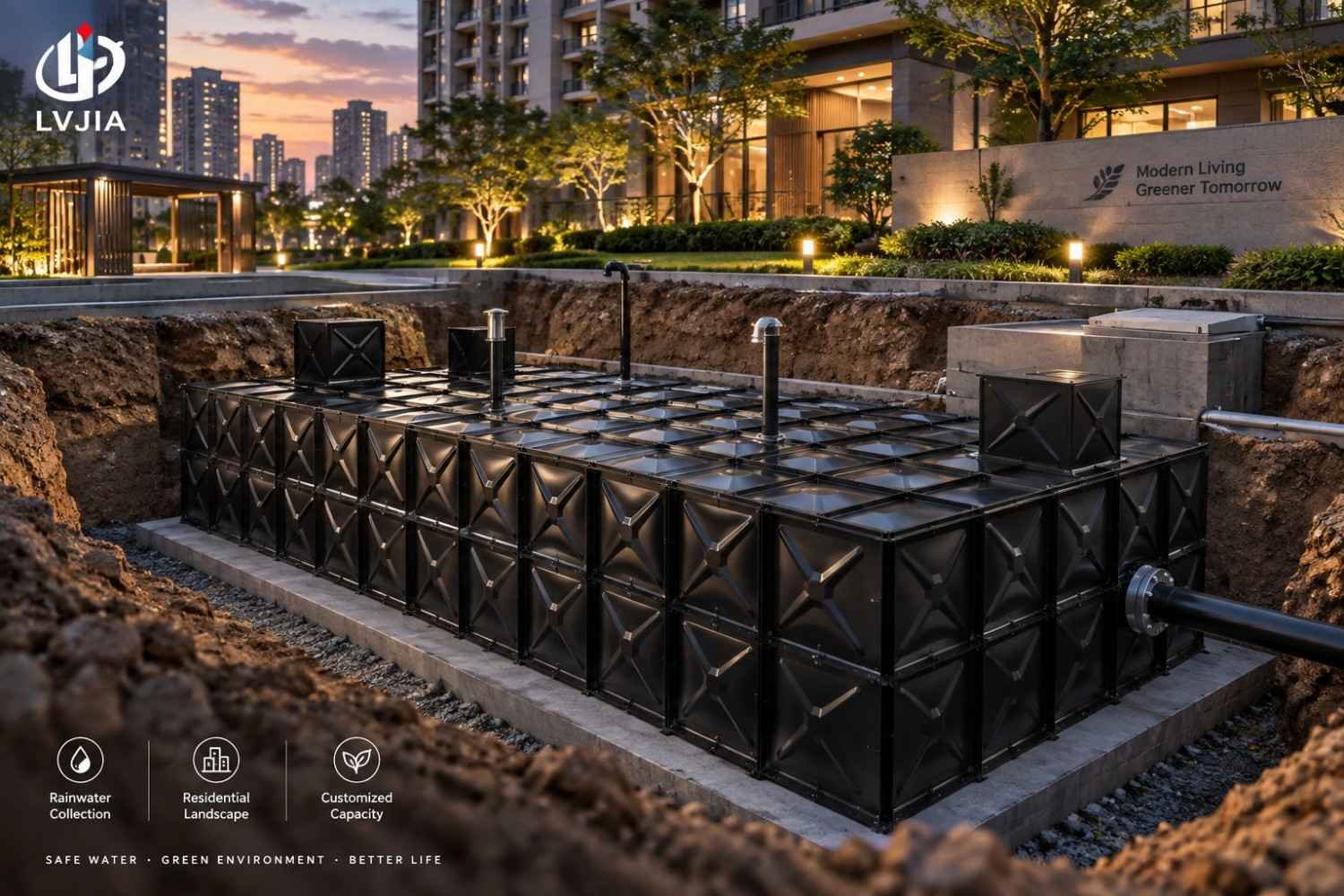
A buried composite-plate underground water tank frees up the surface, resist corrosion and hold their place in the ground.
Buyer rating & certification
5.0 / 5 · Alibaba.com buyer rating
Plate strength tested
405 MPa · tested tensile strength
 CategoryBDF underground tanksComposite plate, bolted and buried.
Sized to your plot and burial depth
1,000+ m³
from 1 m³ upward
Thicker at the bottom, where the load is
2–5 mm
stainless inner, galvanized outer
About this category
Why go
underground
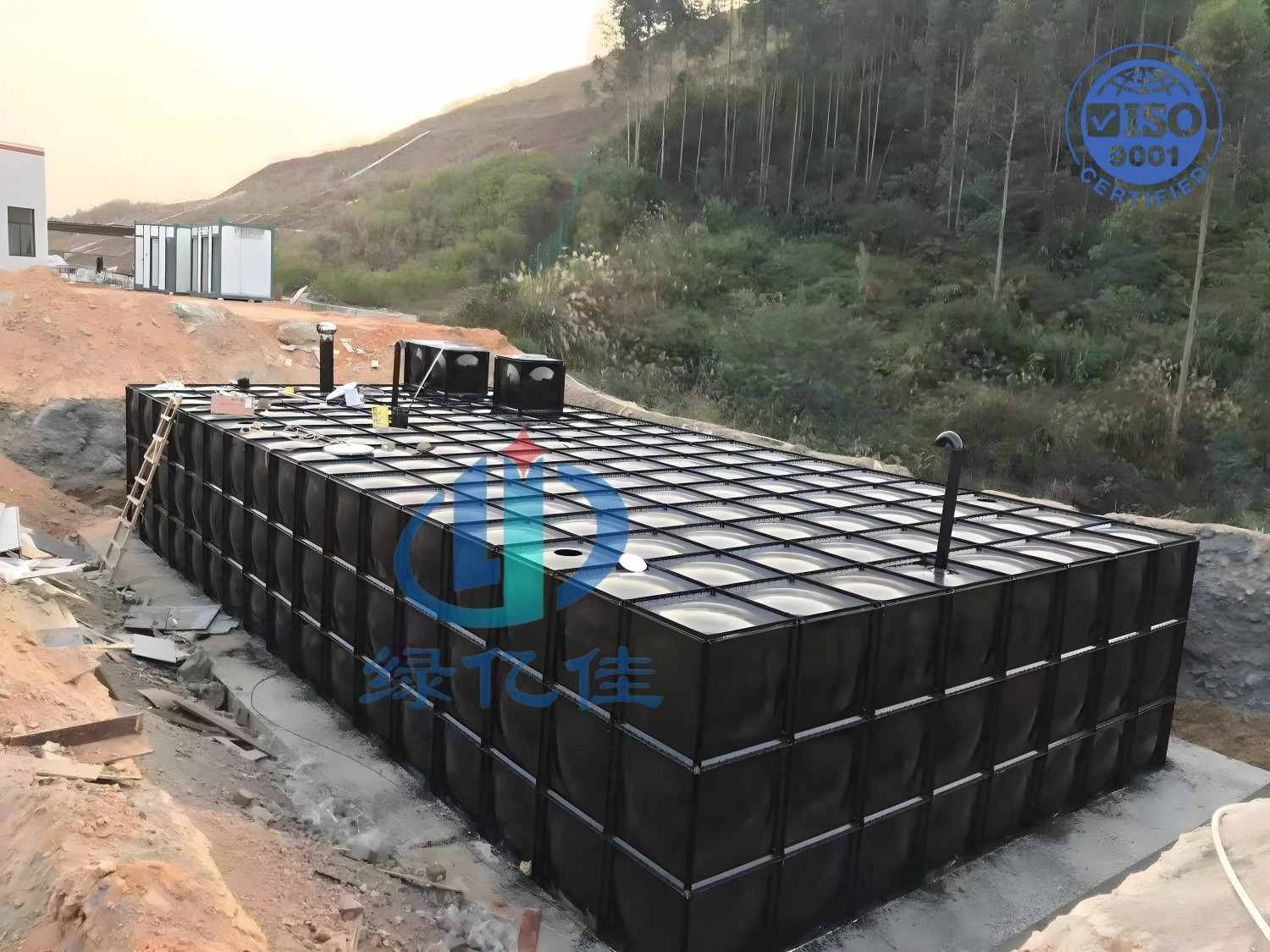
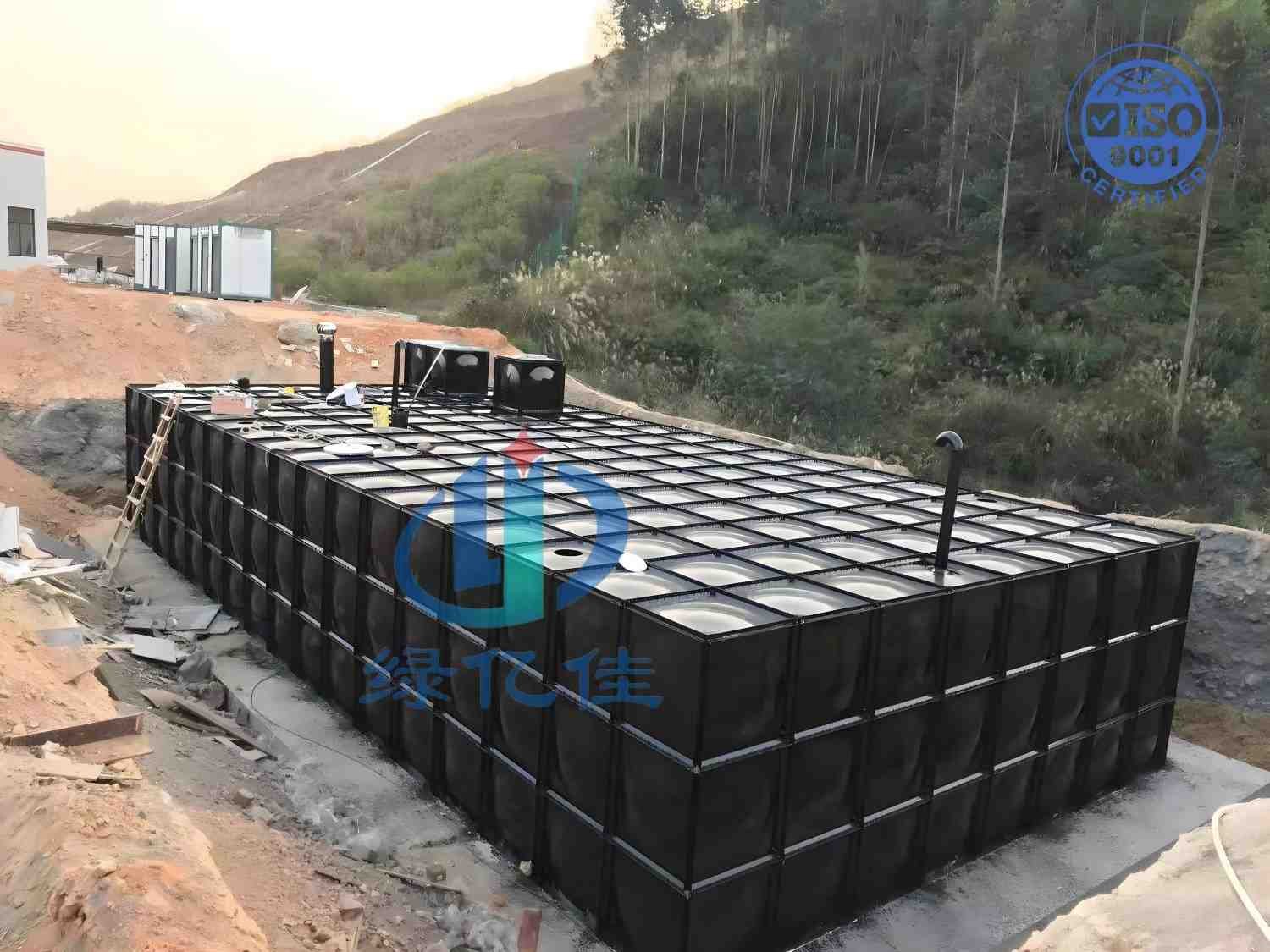
A BDF underground water tank is composite plate — a stainless inner layer bonded to galvanized sheet for strength — bolted together with rubber seals so no welded joint ever meets the water. The underground water tank goes in the ground, which is the point: the car park, garden or yard above it stays usable, and a four-core reinforcement holds the tank down and square against the soil.
- Stainless inner layer — the water meets steel, not coating
- Galvanized outer layer carries the load of the soil
- Bolted with rubber seals — no welding in contact with water
- 1 to 1,000+ m³, laid out to your plot and depth
- Four-core reinforcement, anti-floating and pressure resistant
- Frees the surface above for parking, garden or yard
Hot selling products
The nine tanks we build most often. Hover or tap a card for its specification.
See the full catalog
- Material
- Stainless–galvanized composite (BDF)
- Panel
- 1000 × 1000 mm
- Panel thickness
- 2 – 5 mm
- Certification
- ISO 9001 · CE
BDF Underground Landscape Water Tank
Full details
- Material
- Stainless–galvanized composite (BDF)
- Panel
- 1000 × 1000 mm
- Panel thickness
- up to 5 mm
- Certification
- ISO 9001 · CE
Heavy-Duty BDF Underground Fire Water Tank
Full details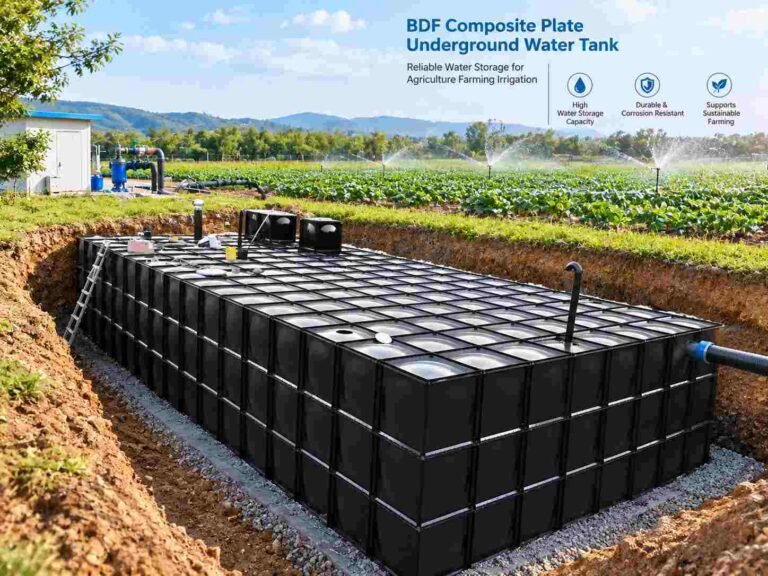
- Material
- Stainless–galvanized composite (BDF)
- Panel
- 1000 × 1000 mm
- Panel thickness
- 2 – 5 mm
- Certification
- ISO 9001 · CE
BDF Underground Irrigation Water Tank
Full details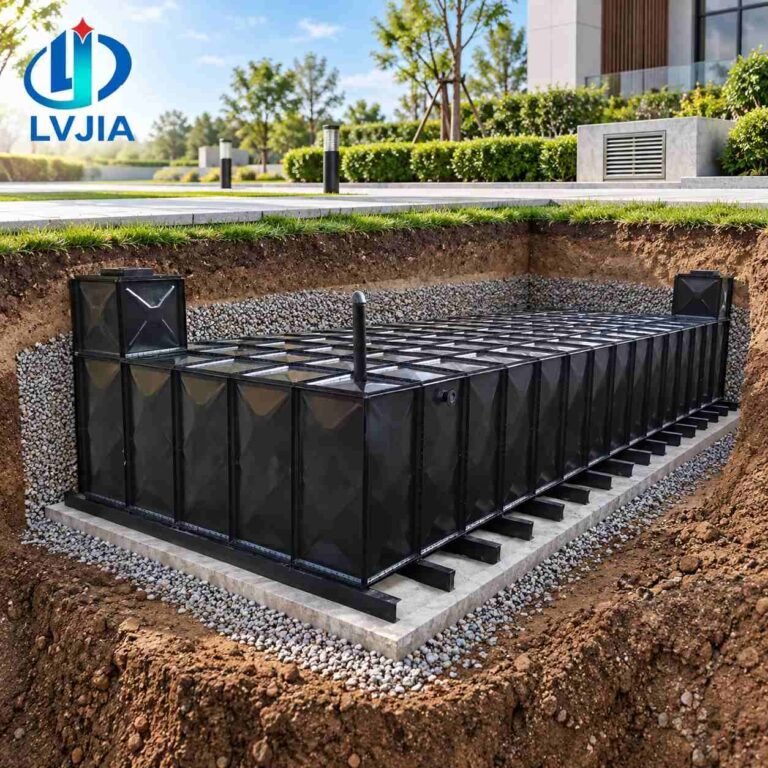
- Material
- Stainless–galvanized composite (BDF)
- Capacity
- 20 m³ · 20,000 L
- Panel
- 1000 × 1000 mm
- Panel thickness
- 2 – 5 mm
BDF Underground 20000L Water Tank
Full details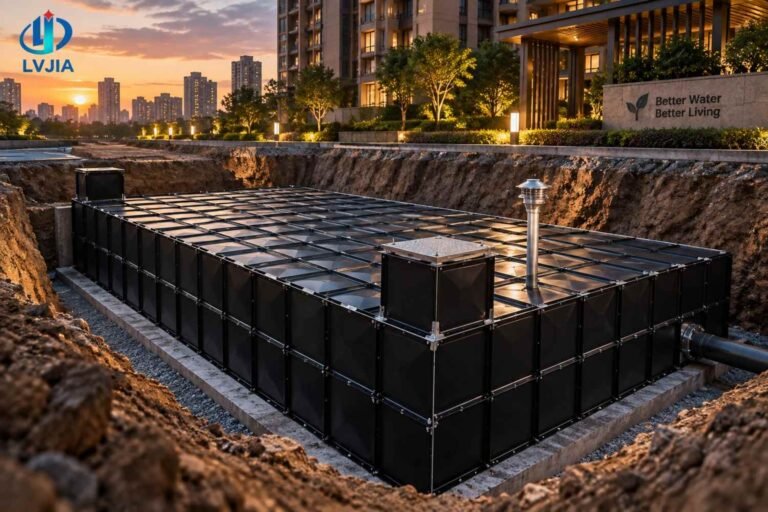
- Material
- Stainless–galvanized composite (BDF)
- Panel
- 1000 × 1000 mm
- Panel thickness
- 2 – 5 mm
- Certification
- ISO 9001 · CE
BDF Underground Rainwater Storage Tank
Full details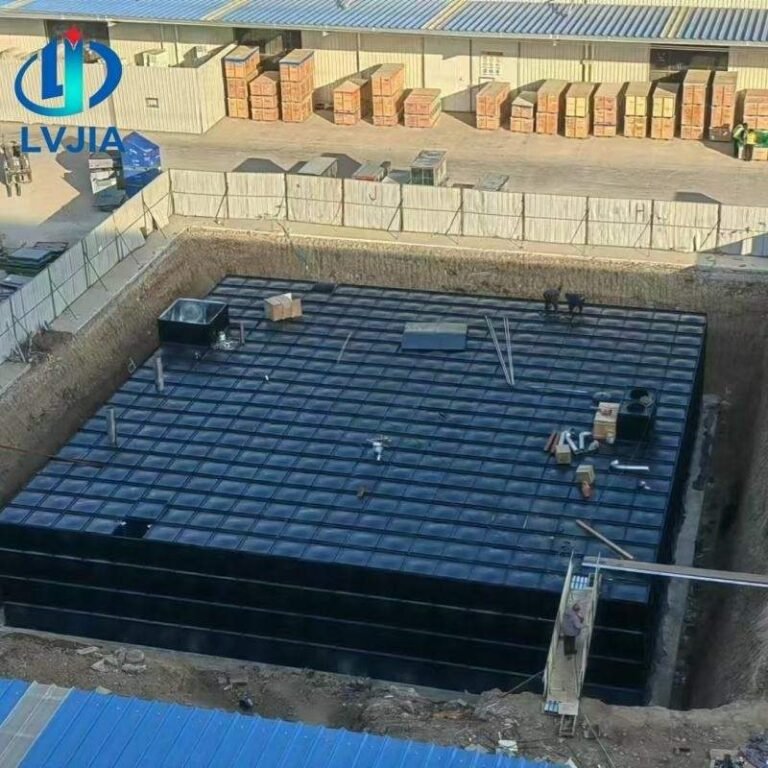
- Material
- Stainless–galvanized composite (BDF)
- Capacity
- 10 m³ · 10,000 L
- Panel
- 1000 × 1000 mm
- Panel thickness
- 2 – 3 mm
BDF Underground Rainwater Tank 10000L
Full details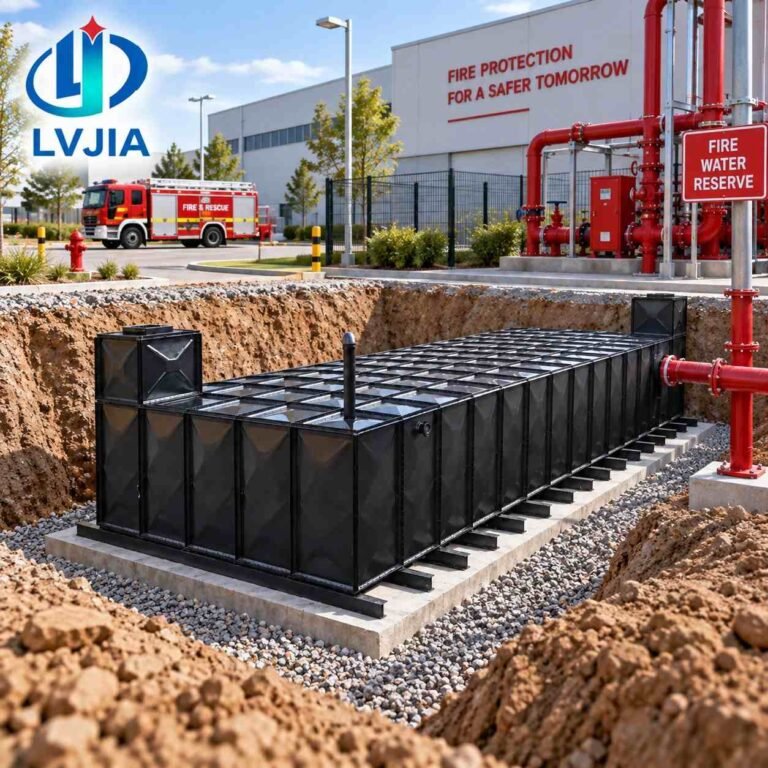
- Material
- Stainless–galvanized composite (BDF)
- Panel
- 1000 × 1000 mm
- Panel thickness
- 2 – 5 mm
- Certification
- ISO 9001 · CE
Anti-Floating BDF Underground Fire Water Tank
Full details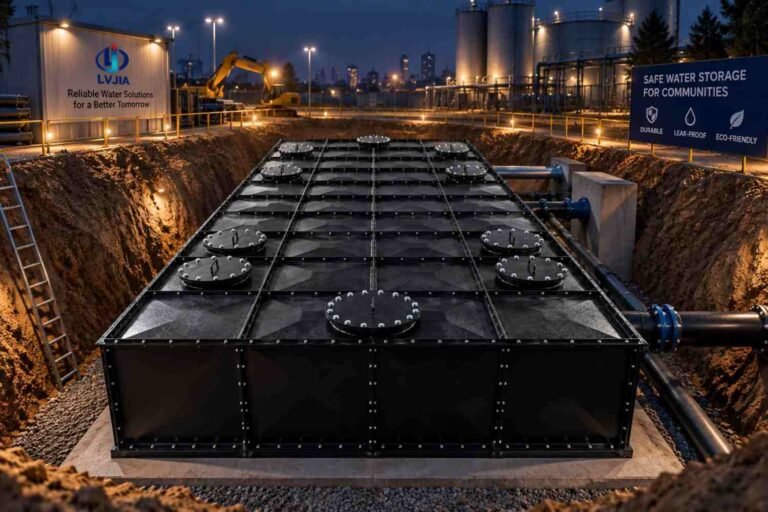
- Material
- Stainless–galvanized composite (BDF)
- Capacity
- 1000 m³
- Panel
- 1000 × 1000 mm
- Panel thickness
- 2 – 5 mm
Food-Grade BDF Underground Water Tank 1000m3
Full details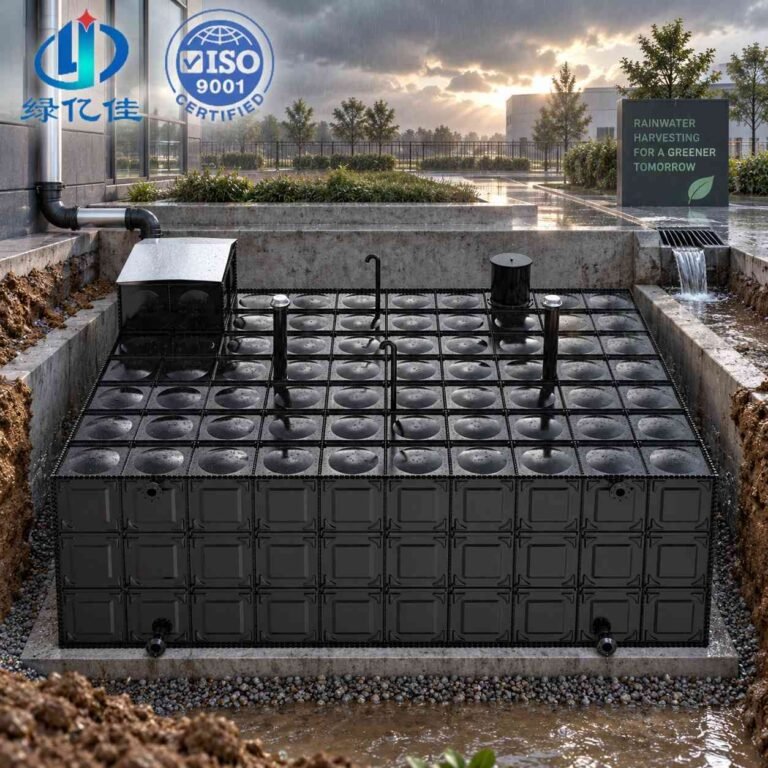
- Material
- Stainless–galvanized composite (BDF)
- Panel
- 1000 × 1000 mm
- Panel thickness
- 2 – 5 mm
- Certification
- ISO 9001 · CE
BDF Underground Fire and Rainwater Tank
Full detailsBDF underground tank catalog
Every tank is built to order from composite plate. Search by name, or filter by capacity, application and build type.
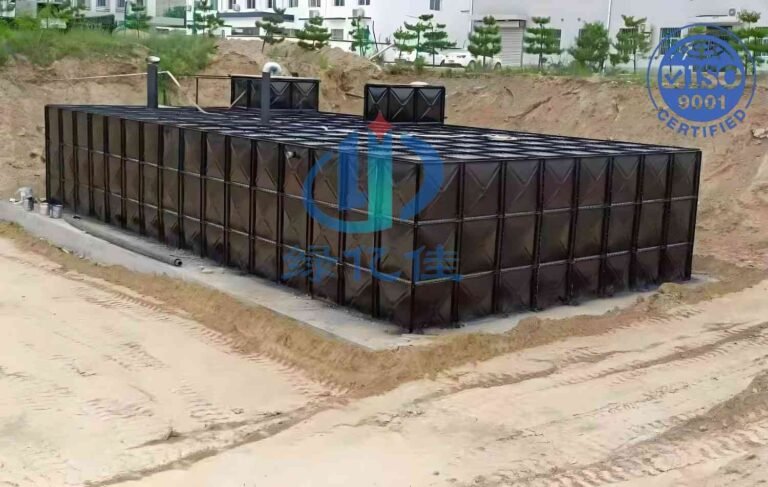
An anti corrosion water tank for the wet-and-dry band — no coating, no liner and no welded seam where a cycling level attacks the wall.
Anti-Corrosion BDF Pump Station Water Tank
View details An anti floating water tank anchored against uplift, for buried fire reserves on sites where the groundwater sits close to the surface.
Anti-Floating BDF Underground Fire Water Tank
View details A 20 m³ BDF water tank buried under the yard. Pressed composite panels, bolted in the pit, built to order from 1 to 1,000+ m³.
BDF Underground 20000L Water Tank
View details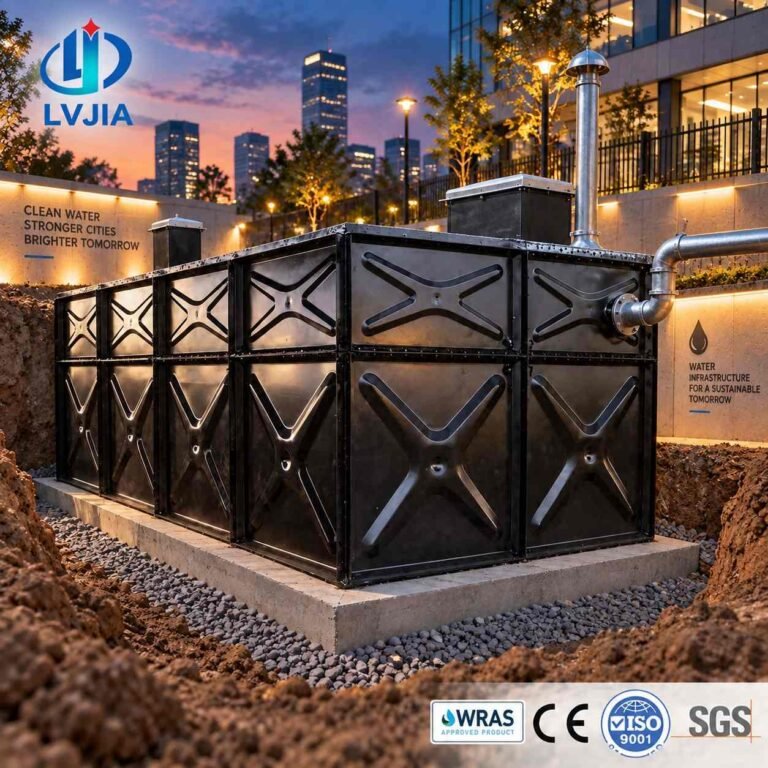
An underground drinking water tank with a stainless wetted face, sealed vented manhole and a drinking-water contact report.
BDF Underground Drinking Water Tank
View details A rainwater fire tank that splits one buried shell into a sealed fire reserve and a working rainwater compartment.
BDF Underground Fire and Rainwater Tank
View details A BDF irrigation water tank that loses nothing to evaporation and grows nothing in the light. Built 1 to 1,000+ m³.
BDF Underground Irrigation Water Tank
View details A landscape water tank buried under the planting, with only a flush manhole cover showing at the surface.
BDF Underground Landscape Water Tank
View details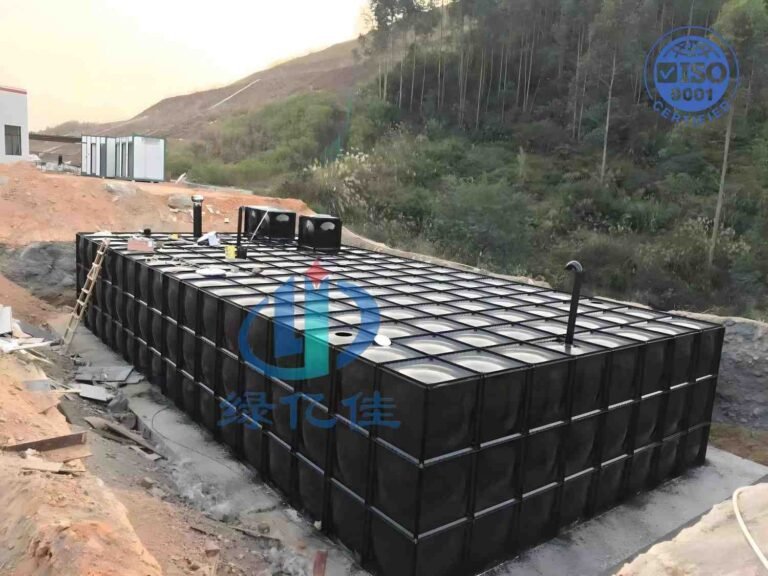
A 1000 m³ pump station water tank arranged as a wet well — suctions, anti-vortex plates and instrumentation fitted at the factory.
BDF Underground Pump Station Tank 1000m3
View details A buried rainwater storage tank for large industrial roofs — sealed against light and insects, with no ground area given up.
BDF Underground Rainwater Storage Tank
View details A 10000 litre water tank for houses, smallholdings and light industrial units — bolted together in the pit with no crane.
BDF Underground Rainwater Tank 10000L
View details A 1000 m³ food grade water tank with a stainless wetted face, no lining and a drinking-water contact report.
Food-Grade BDF Underground Water Tank 1000m3
View details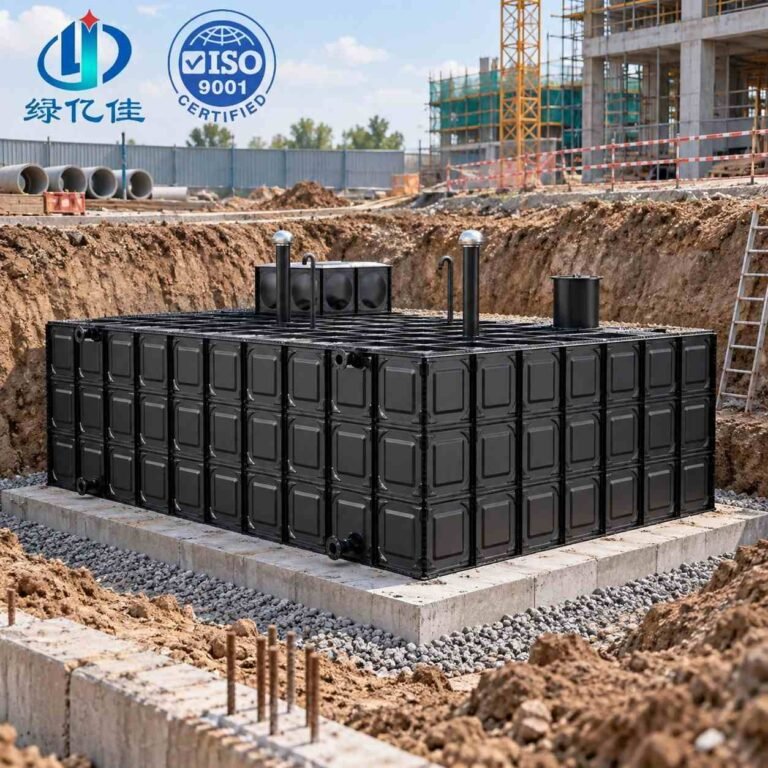
The BDF composite water tank in its plainest form — stainless to the water, galvanised steel to the load, bolted on site.
Galvanized Stainless Composite BDF Water Tank
View details A buried fire water tank built for loaded ground above — 5 mm panels at full depth and a cover slab rated for vehicles.
Heavy-Duty BDF Underground Fire Water Tank
View detailsNo product matches that
Try a shorter search, or clear a filter or two.
Product capabilities
Capability, Process & Control
Every BDF underground water tank on this page is cut, pressed, reinforced, punched and tested at our plant in Wucheng County, Dezhou, then packed with its seals and bolt sets. That is what lets us hold a tolerance, change a dimension on your drawing and still ship on the date we gave you.
- Composite plate cutting and pressing
- Four-core reinforcement fitted to the panel
- Bolt-hole punching and dimensional inspection
- Kitted with seals and bolt sets, then export packed
Capability
Tested tensile
405 MPa
against a 350 MPa requirement
On-time dispatch
100%
recorded on Alibaba.com
How every tank is built, stage by stage
Four stages from flat composite plate to a kitted tank on a pallet. The same route runs for every tank in this catalog — only the reinforcement and the panel size change.
- Cutting & pressing Composite plate cut and pressed into panels.
- Reinforcement Four-core reinforcement fitted for buried loads.
- Punching & inspection Bolt holes punched, then every panel measured.
- Testing & dispatch Trial-assembled, leak tested, kitted and packed.
Cut, pressed, reinforced and tested at our plant in Wucheng, Shandong.
Every product here can be made to your drawing
Nothing in this catalog is a fixed size. Footprint, burial depth, connections and pump integration are all specified per order.
- Any footprint and depth Laid out to your plot and burial depth.
- Box-pump integrated builds Pump set built into the tank for fire and rainwater.
- Fittings on your schedule Manholes, vents, inlets, outlets and level gear.
- Drawing first, commitment after A layout and a bill of materials before anything is agreed.
Tell us the capacity, the duty and the space — an engineer replies.
The plate is tested before it is a tank
Plate for every underground water tank is tested for tensile and yield strength before it becomes a panel: 405 MPa against a 350 MPa requirement, 296 MPa against 220. The inspection behind that runs on every tank we build.
Inspection & testing
In house- Hydrostatic leak testFilled and held before dispatch
- Plate strength testingTensile and yield, before pressing
- Panel size & hole positionMeasured against the approved drawing
- Material traceabilityEvery plate batch logged to its record
- Anti-floating checkReinforcement verified before packing
Certifications & standards
On file- Tensile 405 MPaRequirement is 350 MPa
- CE · EN 13280:2001ICR/VC/HS2506113
- ISO 9001:201507624Q0960R3S-SD/001
- SGS verified supplierAssessment and onsite check
Quality
Inspection · testing
Certification · standards
Tested yield strength
Inspection stages
Inspection process
Six stages · every batch- 1
Incoming plate
Composite plate records checked against the order.
- 2
Strength testing
Tensile and yield measured before pressing.
- 3
Pressing
Panels pressed, then thickness and size checked.
- 4
Reinforcement
Four-core reinforcement fitted and verified.
- 5
Hydrostatic test
Filled, held and inspected before dispatch.
- 6
Final dimensions
Checked against the approved drawing.
Where BDF tanks go to work
Six sectors served from one plant in Wucheng County, Dezhou. The companies shown in each strip are well-known operators in that sector, listed as examples of the work — they are not LVJIA customers.
Reference builds & certifications
ISO 9001:2015
Quality management system
Cert. no. 07624Q0960R3S-SD/001 · valid to 21 Jun 2027ISO 14001:2015
Environmental management
Cert. no. 07624E0636R2S-SD/001 · valid to 9 Oct 2027CE marking
EN 13280:2001, issued by ICR
Verification no. ICR/VC/HS2506113 · valid to 23 Jun 2030& test reports
Buried pump station · BDF
Note: the tank is assembled in the excavation panel by panel, so it can be built in a pit no wider than the tank itself.
See the buildBuried reserve · fire & rainwater
Note: a buried tank has to resist the ground pushing in and the water table pushing up, which is what the four-core reinforcement and the anti-floating design are for.
See the buildThe verified record
Verified by SGS — supplier assessment and onsite check, valid to June 2027.
See the numbersThe plant behind the tank
One plant, one team — cutting, welding, finishing and testing all stay in house.
Our storyRelated products
Four more tanks from the same plant, built to the same standard. Hover or tap a card for its specification.
See the full catalog - Material
- Stainless–galvanized composite (BDF)
- Capacity
- 1000 m³
- Panel
- 1000 × 1000 mm
- Panel thickness
- 2 – 5 mm
BDF Underground Pump Station Tank 1000m3
See catalog - Material
- Stainless–galvanized composite (BDF)
- Panel
- 1000 × 1000 mm
- Panel thickness
- 2 – 5 mm
- Certification
- ISO 9001 · CE
BDF Underground Drinking Water Tank
See catalog - Material
- Stainless–galvanized composite (BDF)
- Panel
- 1000 × 1000 mm
- Panel thickness
- 2 – 5 mm
- Certification
- ISO 9001 · CE
Anti-Corrosion BDF Pump Station Water Tank
See catalog - Material
- Stainless–galvanized composite (BDF)
- Panel forming
- One-stroke press and draw
- Panel thickness
- 2 – 5 mm
- Certification
- ISO 9001 · CE
Galvanized Stainless Composite BDF Water Tank
See catalogUnderground water tank questions, answered by the factory
The questions buyers ask before an underground water tank is quoted, answered with the figures our own inspection sheets use.
Ask our engineersWhat is a BDF underground water tank made of?
A BDF underground water tank is built from composite plate: a stainless steel inner layer bonded to a galvanized steel backing. The stainless face is the only surface the water ever touches, and the galvanized layer behind it carries the load, which is why an underground water tank built this way needs no lining and no internal coating. Panels are pressed at 1000 × 1000 mm, 2 to 5 mm thick, and bolted with rubber seals into a 16 mm assembled wall — no welded joint is ever in contact with the stored water.
How strong is the plate?
Composite plate is tested before it becomes a panel. LVJIA records a tensile strength of 405 MPa against a 350 MPa requirement and a yield of 296 MPa against 220 MPa, with elongation at 24 per cent against a 23 per cent minimum. Those margins matter in an underground water tank because the shell is loaded from outside by soil and groundwater as well as from inside by the water it holds.
Will an underground water tank float when the ground is wet?
Not when it is anchored properly. Every LVJIA underground water tank uses four-core reinforcement that holds the shell down and square against the surrounding soil, and the anti-floating arrangement is verified before the tank is packed. Send the burial depth, the water table and the ground conditions with your size and the reinforcement is specified around them rather than added by habit.
What capacities are available?
An underground water tank is built to the plot rather than to a size chart, from 1 m³ up to 1,000+ m³. Because it is buried, the surface above it stays usable — a car park, a yard, a garden or a service road — which is usually the reason an underground water tank is specified in the first place. Give us the footprint you can excavate and the volume you need to hold and the panel schedule is drawn around both.
What temperature and duties does it handle?
Stored water from 0 to 100 °C. In practice an LVJIA underground water tank is specified for buried fire reserve, rainwater harvesting, pump-station wet wells, irrigation and wash-down duty. Rainwater builds take a first-flush diverter and filter on the inlet. Tell us the duty and the cycling pattern with the size, because a pump station that draws the level down daily is detailed differently from a fire reserve that sits full.
What certifications does it carry?
Every underground water tank ships against ISO 9001:2015, certificate 07624Q0960R3S-SD/001, with ISO 14001 and ISO 45001 also on file — ISO 9001 sets out what that standard covers. CE marking is held against EN 13280:2001 under ICR/VC/HS2506113, LVJIA is an SGS verified supplier, and the galvanized layer follows the hot dip practice described in ISO 1461.
How is it inspected, packed and shipped?
Each underground water tank is hydrostatically leak tested, filled and held before dispatch. Plate strength is tested before pressing, panel size and bolt-hole position are measured against the approved drawing, every plate batch is logged to its material record and the anti-floating reinforcement is checked before packing. The tank then ships flat, kitted with its seals and bolt sets and export packed, from the LVJIA plant in Wucheng County, Dezhou, Shandong.
Send us your tank size. We send back a drawing and a price.
Tell us the capacity, the plot and how deep it has to sit. An engineer — not a sales script — replies with a panel layout, a bill of materials and a delivered cost.
Have a drawing? Attach DWG, PDF or images to your enquiry — we build to your dimensions, not to a size chart.
- Manufacturer, not a trader
- Plate tested to 405 MPa tensile
- Reply within 2 hours