


Factory tour
One factory, every stage
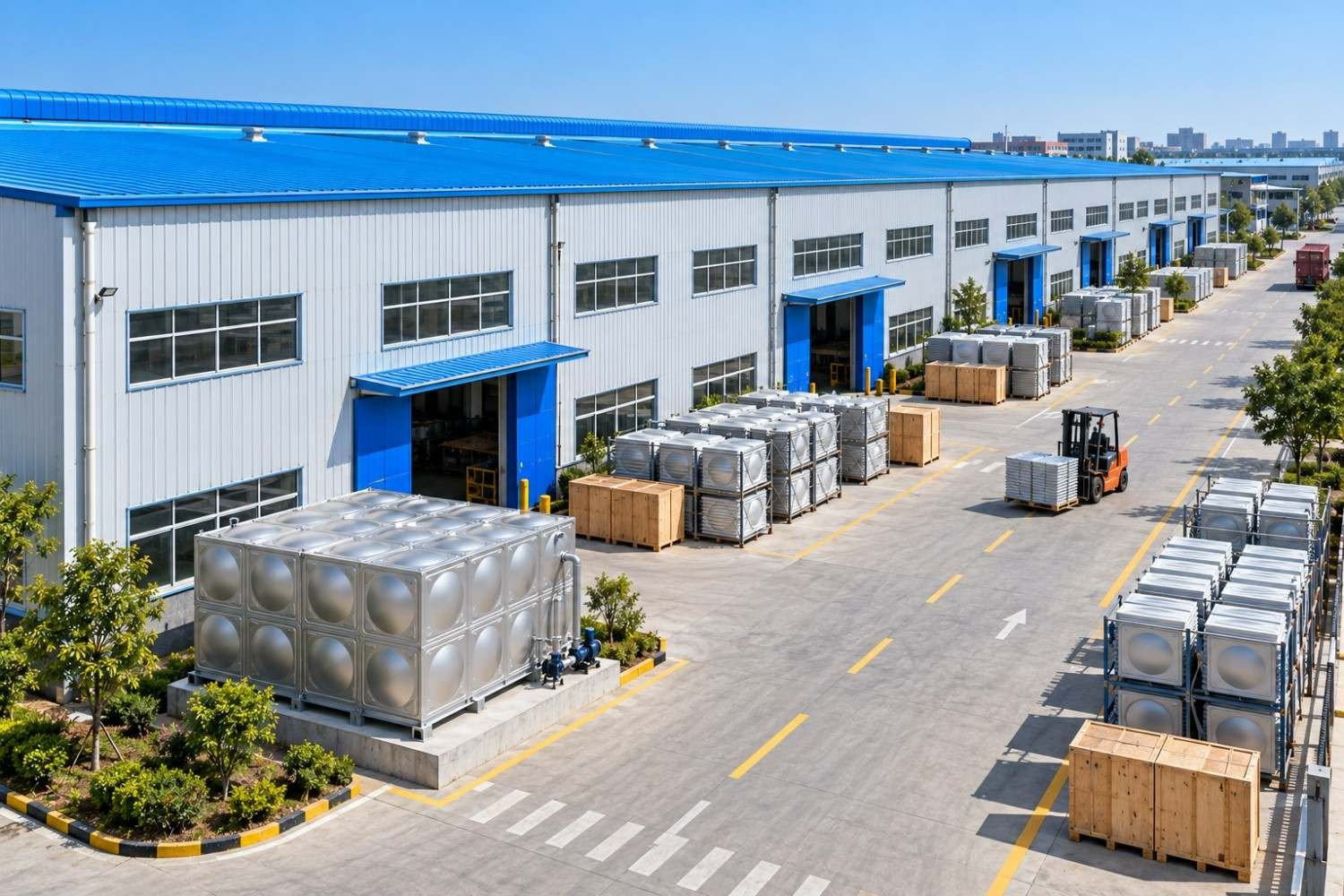
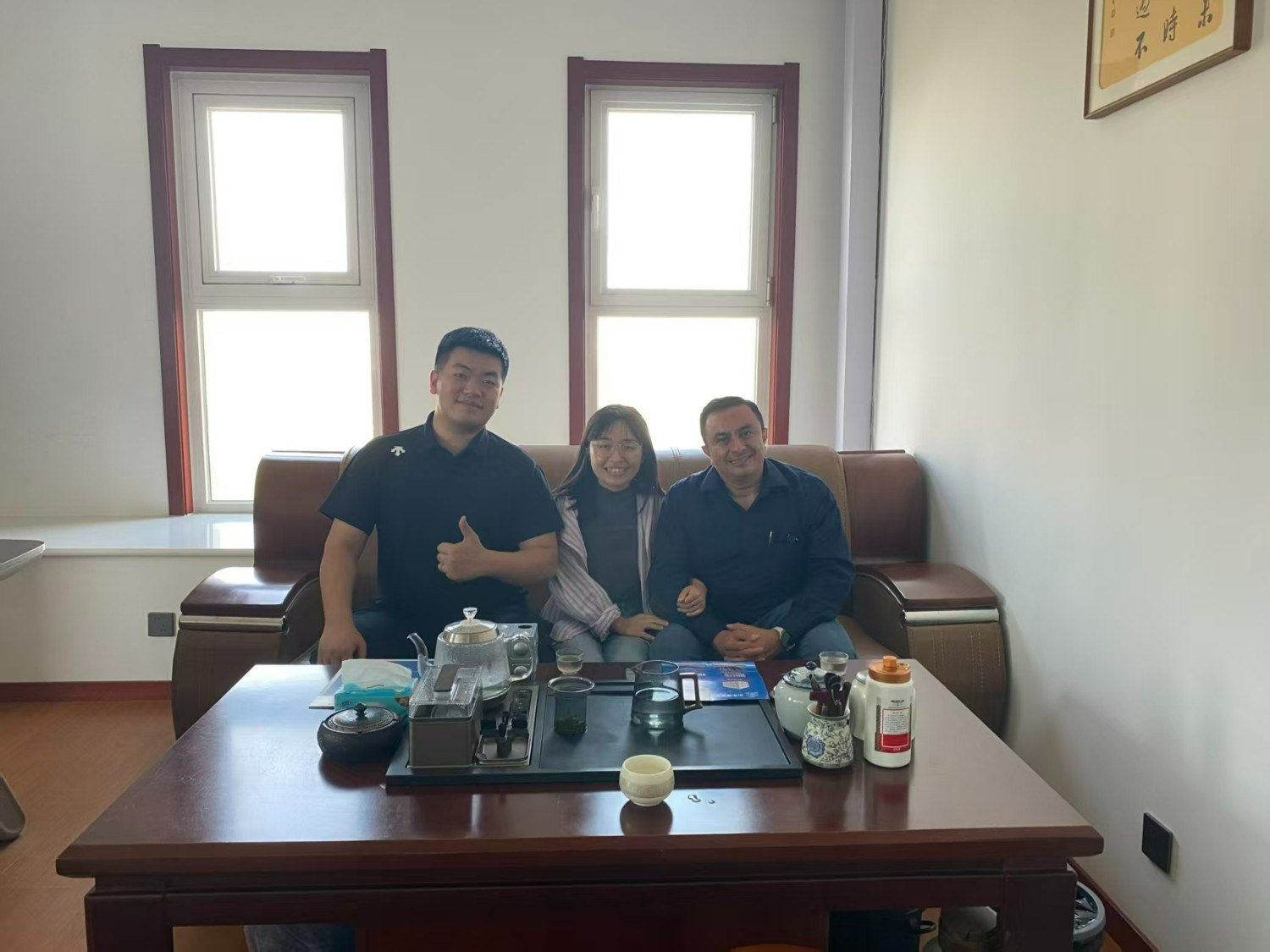
Every LVJIA water tank is cut, pressed, punched, formed and inspected at our own water tank factory in China, in Wucheng County, Dezhou. This tour follows a water tank through the whole build.
Walk the factory without the flight.
Exporting to 4 regions
Built start
to finish
on one site
Facility overview
One site, three lines, one team
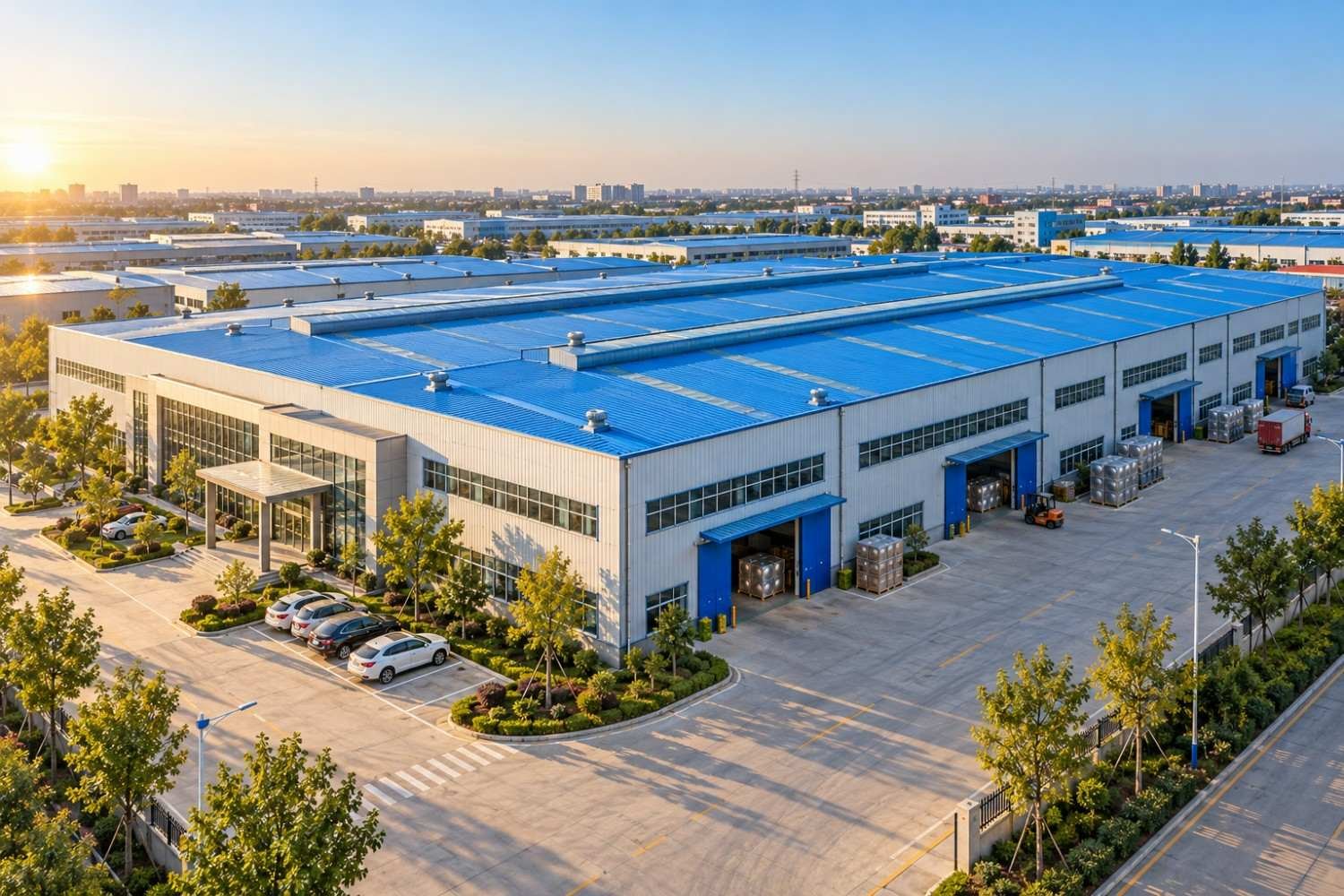
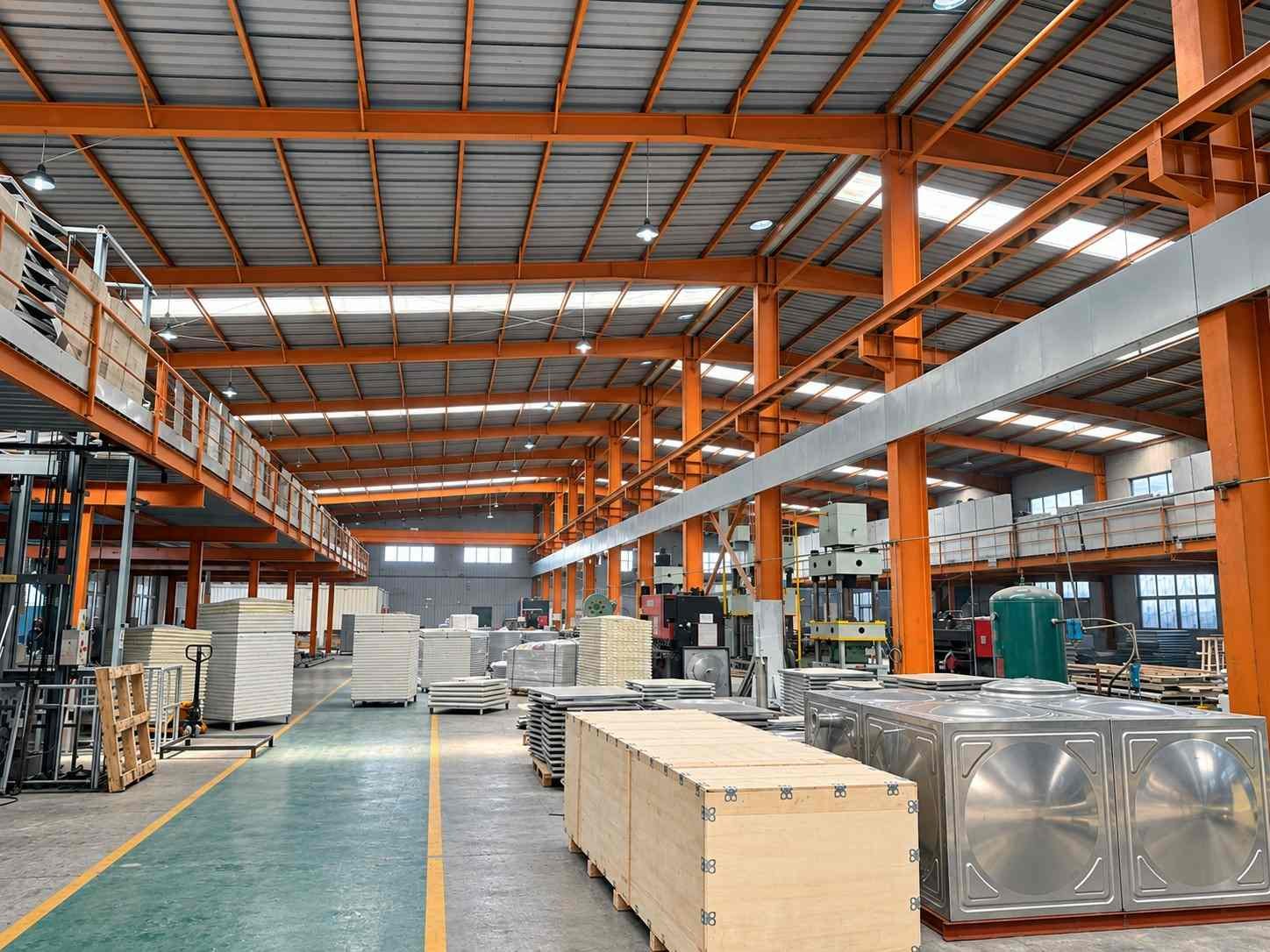
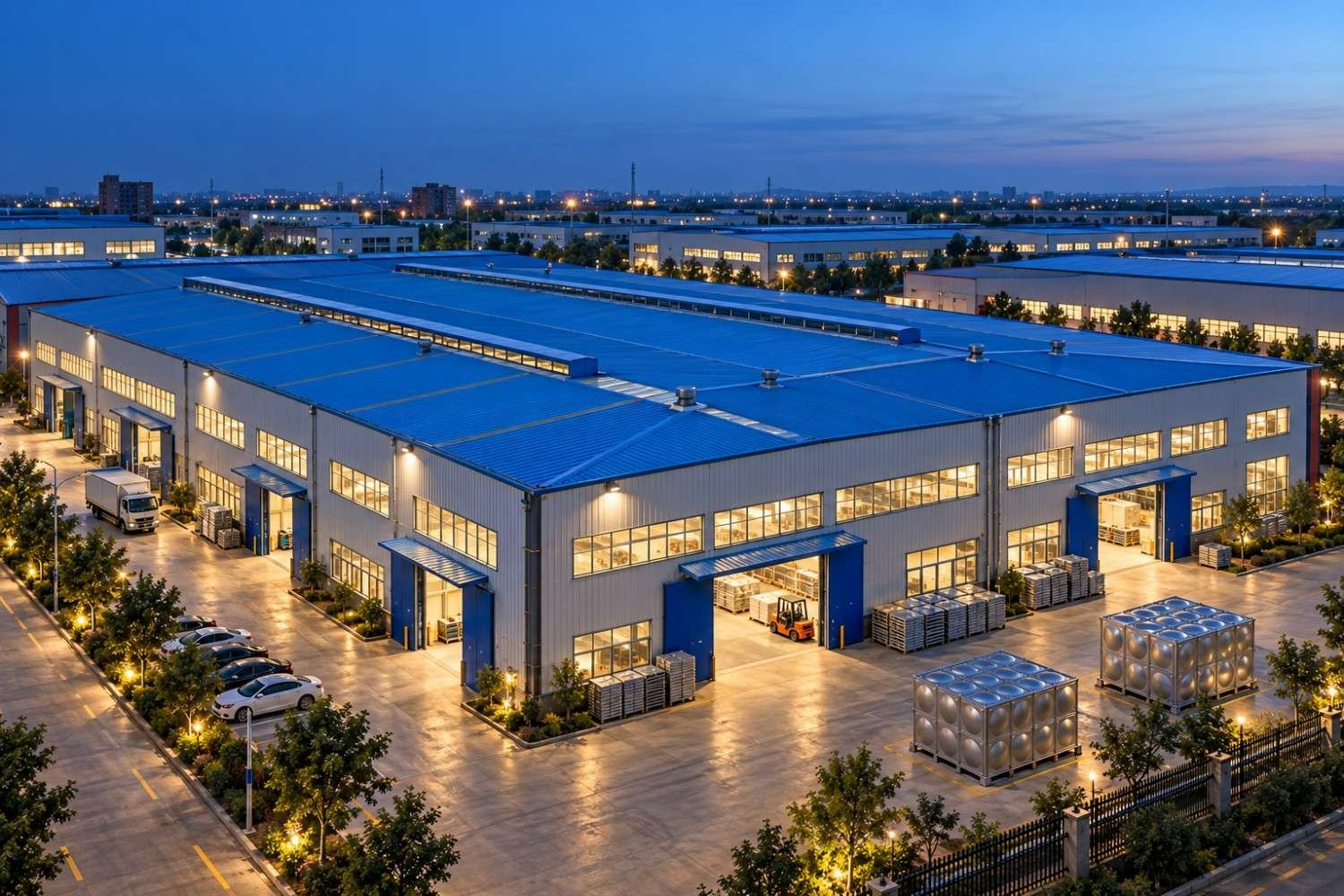
Our 11,000 m² factory in Wucheng County handles the whole build. Raw material comes in at one end, and inspected, packed tanks leave from the other.
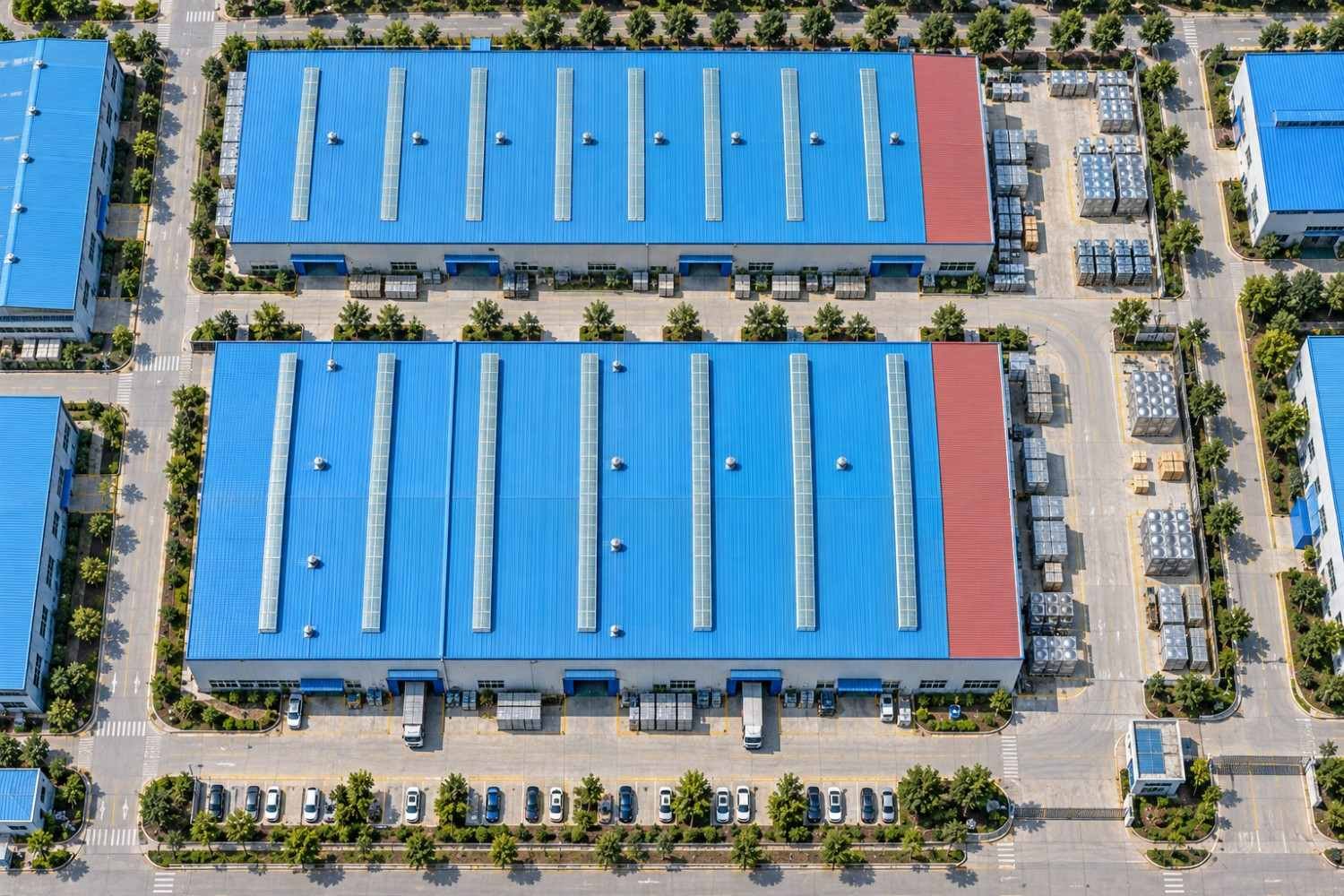
Material moves one way through the factory, from receiving to packing.
Six stages, each one feeding the next.
- 01 Raw material
- 02 Cutting
- 03 Pressing
- 04 Punching
- 05 Inspection
- 06 Packing
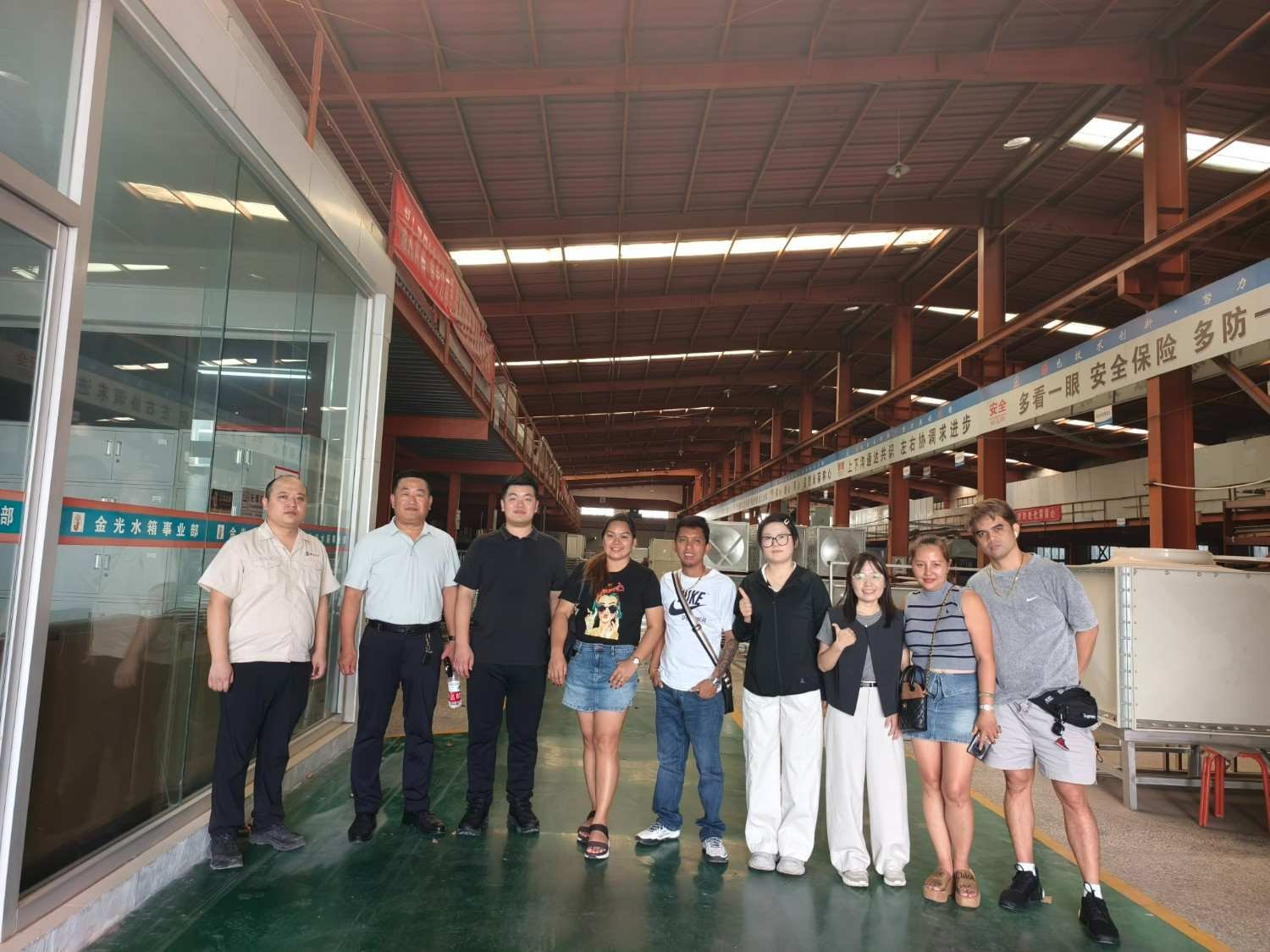
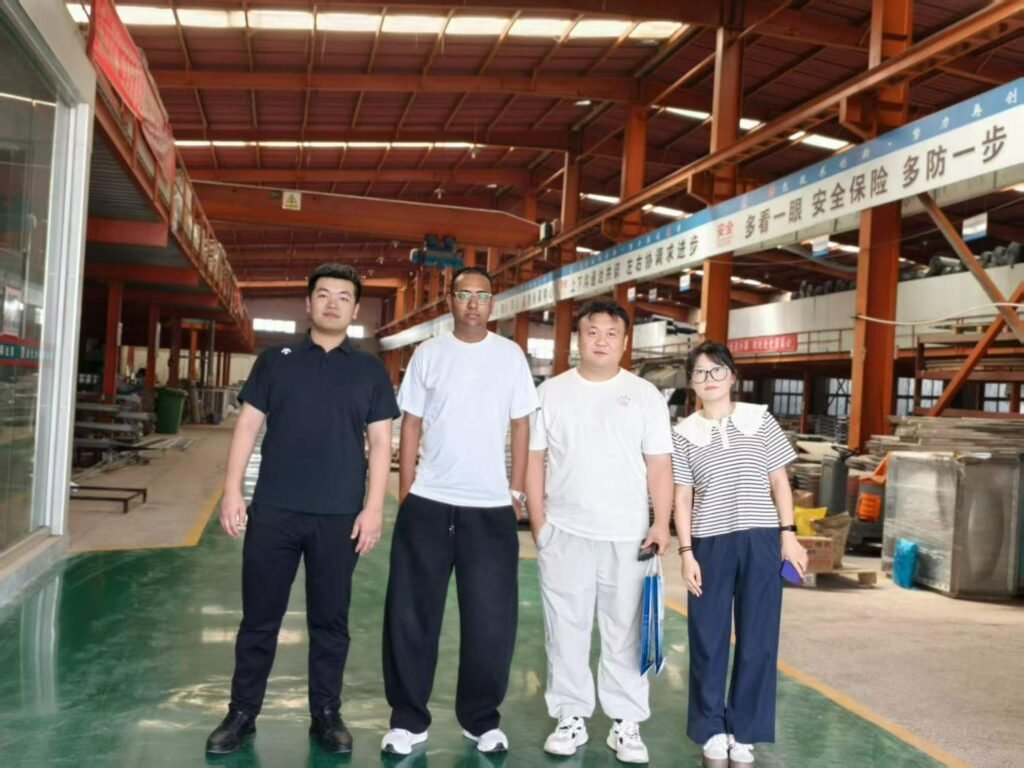
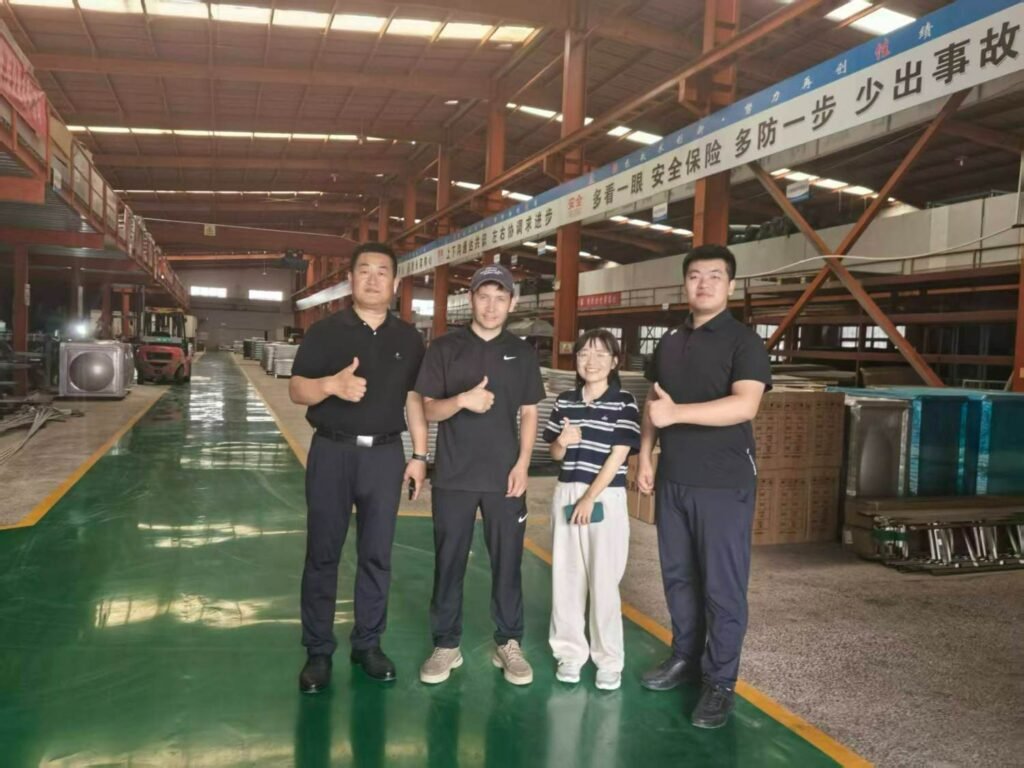
Production areas
Five areas, one direction of travel
A tank never moves backwards. Each area passes finished work to the next, and every handover is a check, so a problem is caught where it starts.
 Receiving
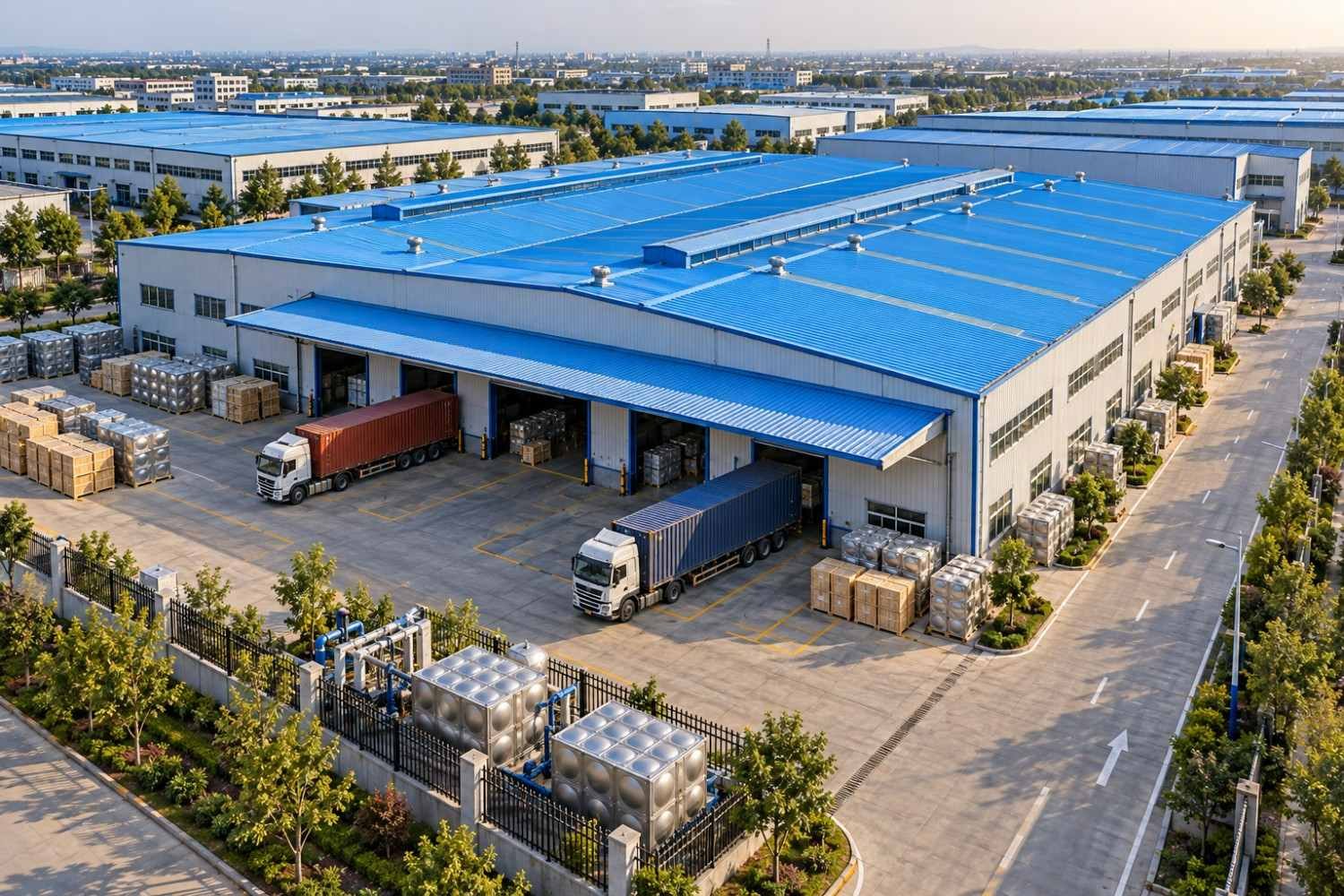 Dispatch
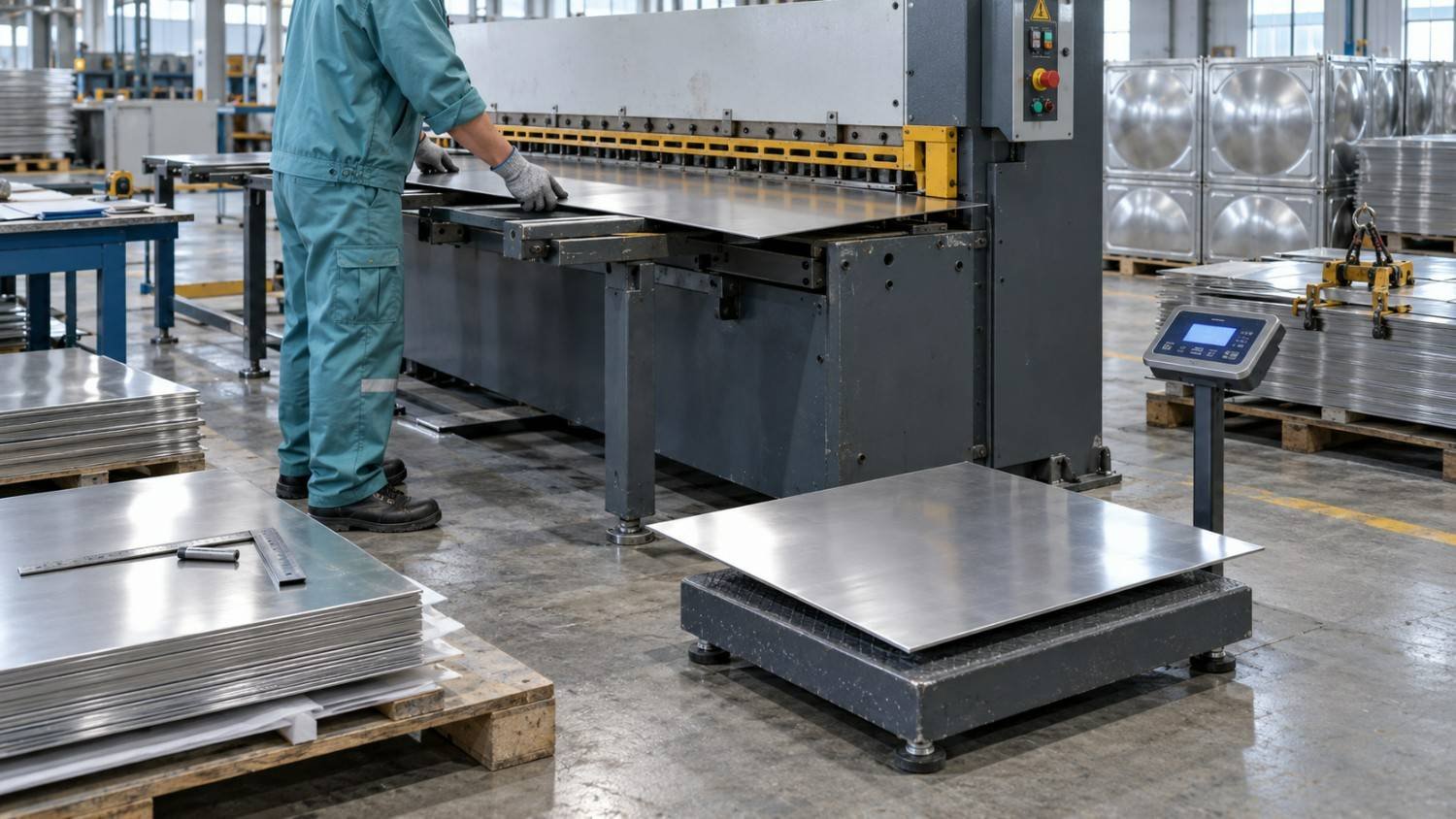
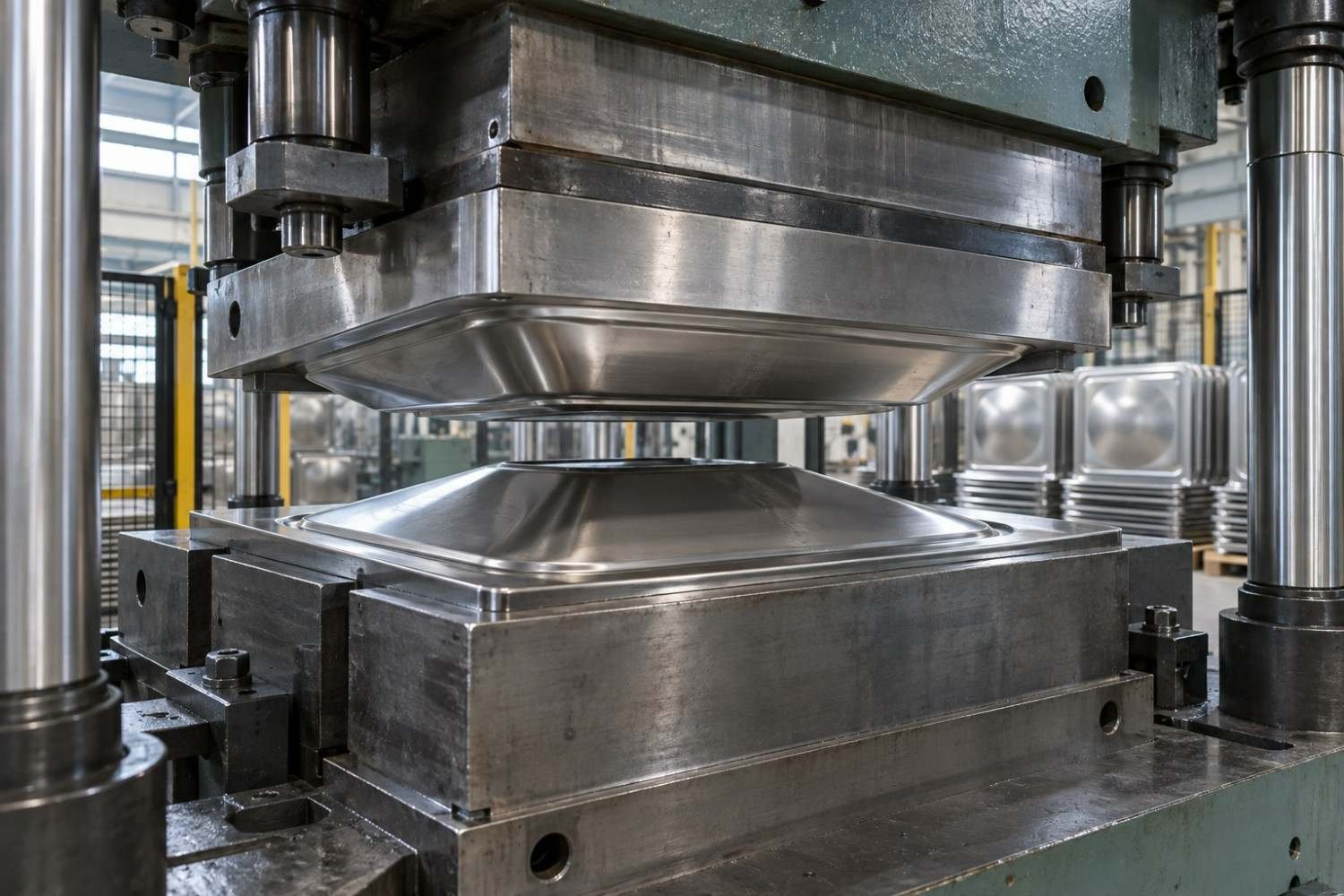
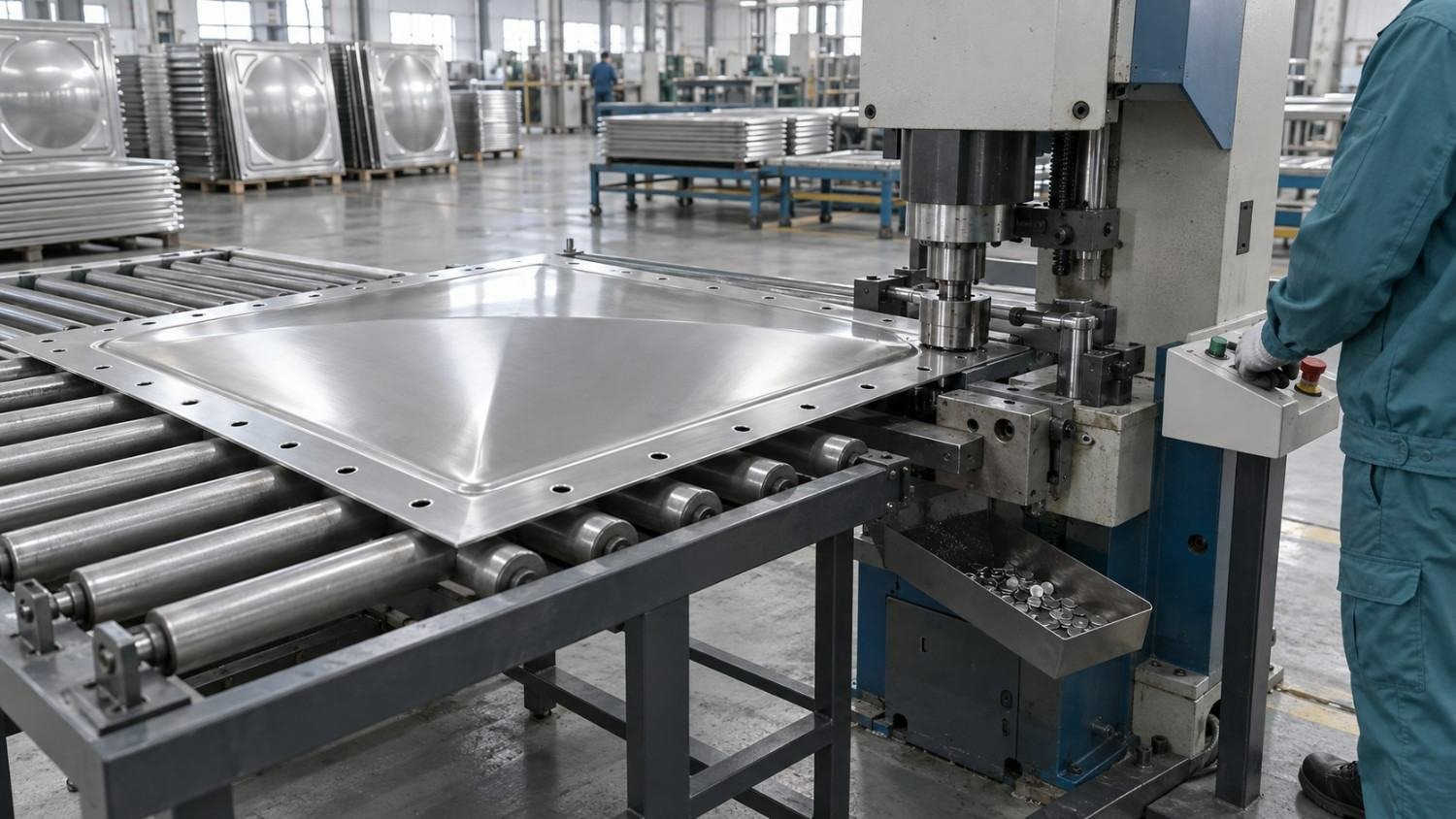
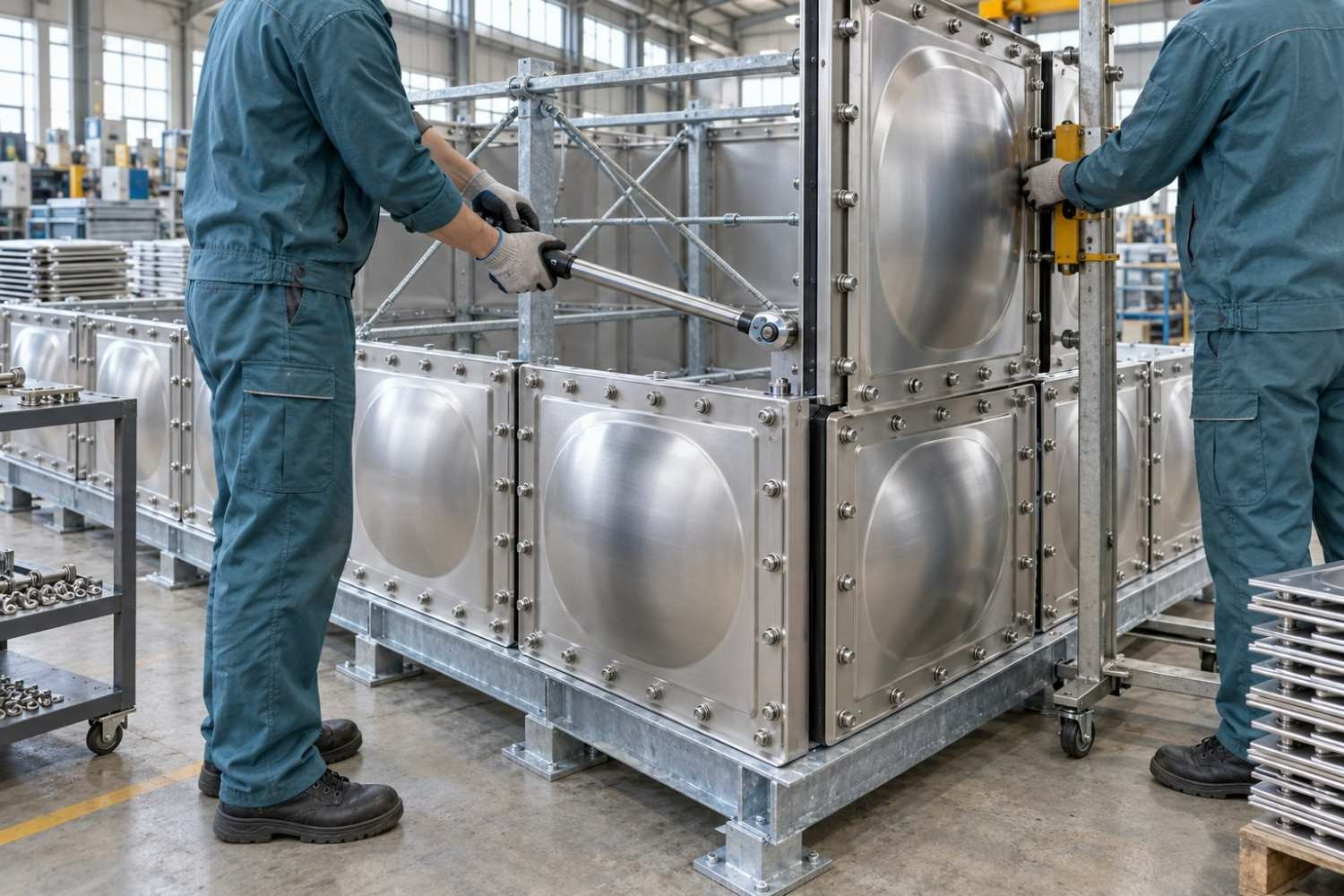
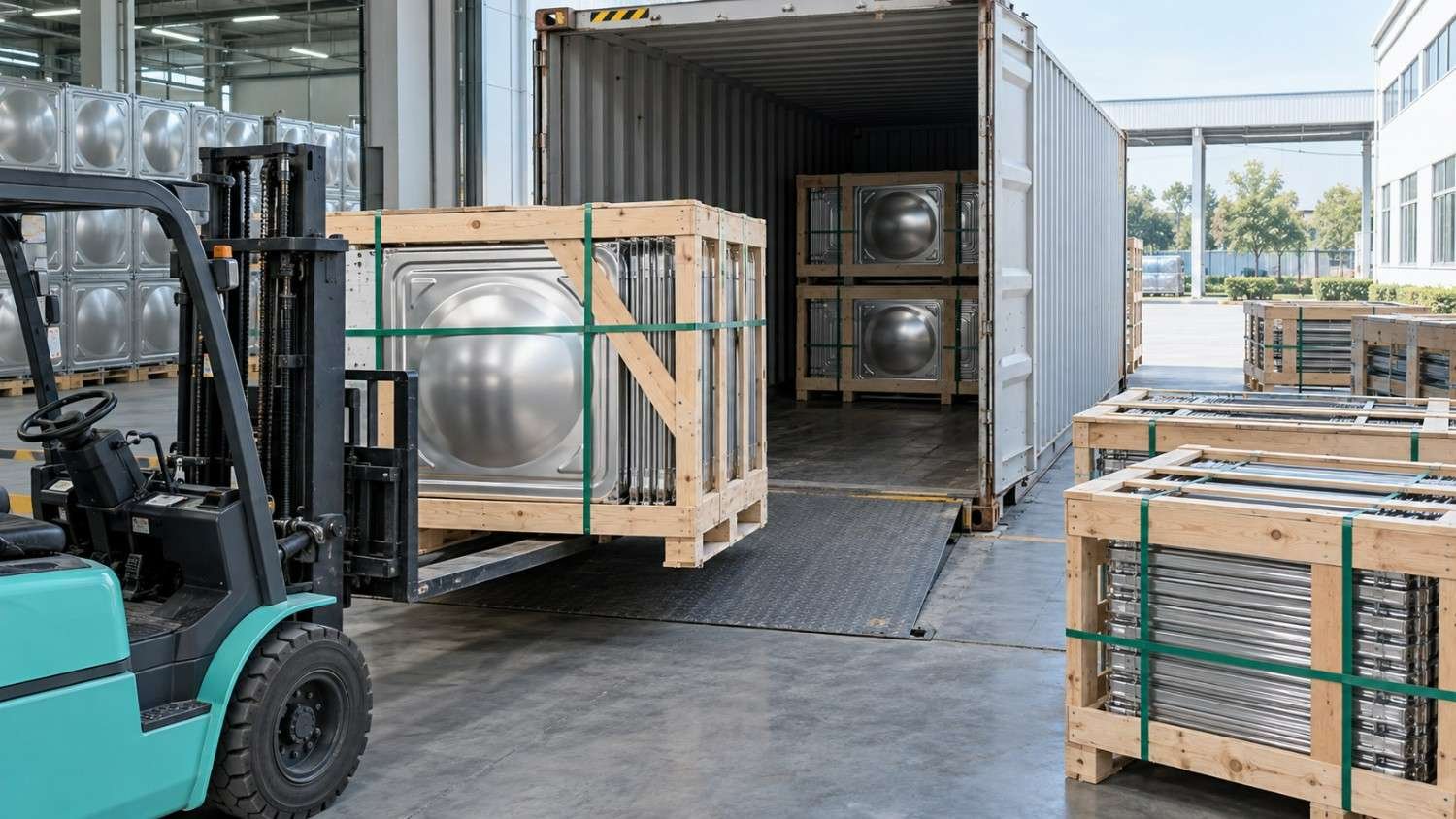
Each caption describes the work done in that part of the Wucheng factory.
See the full galleryManufacturing equipment
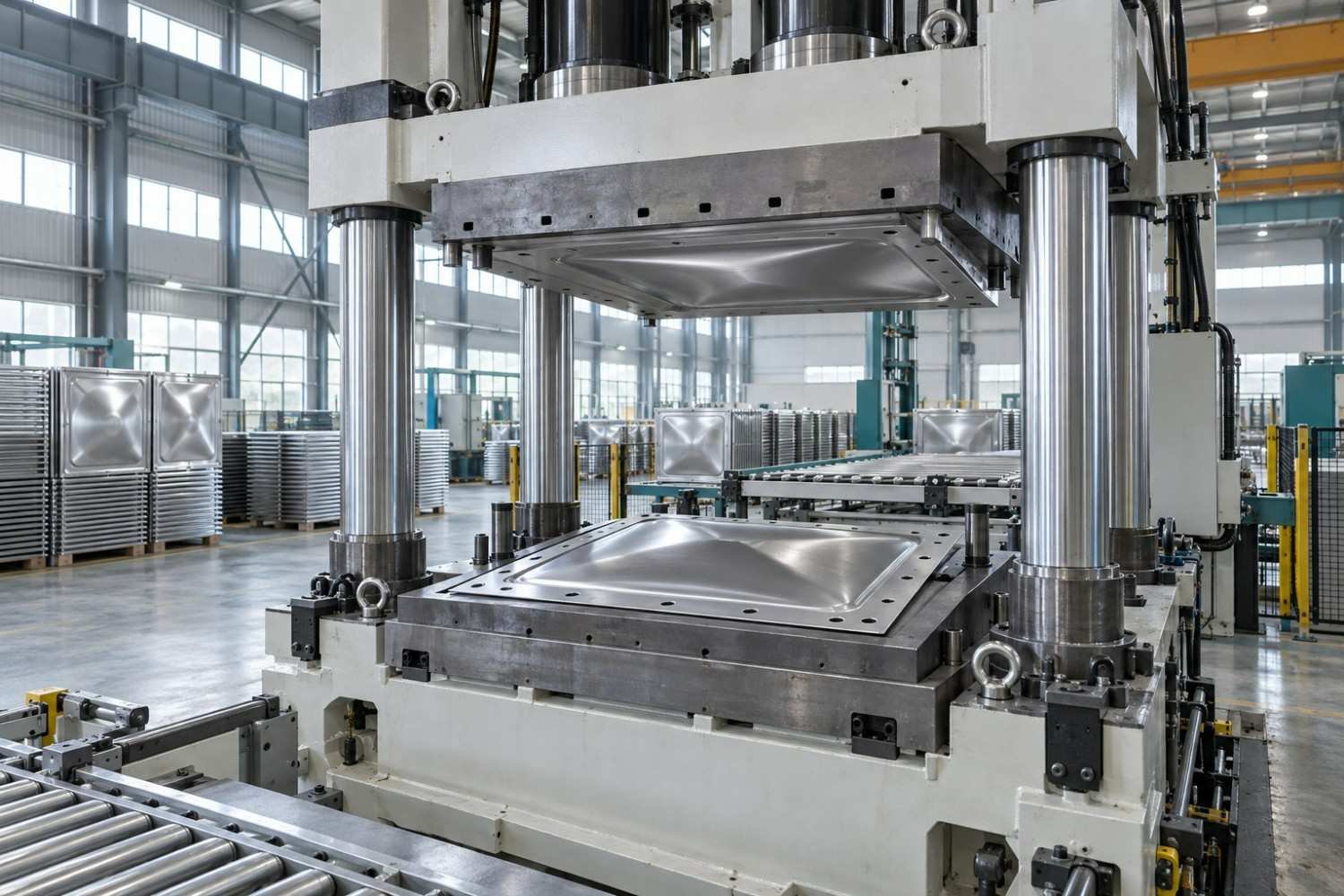
Make the panels fit
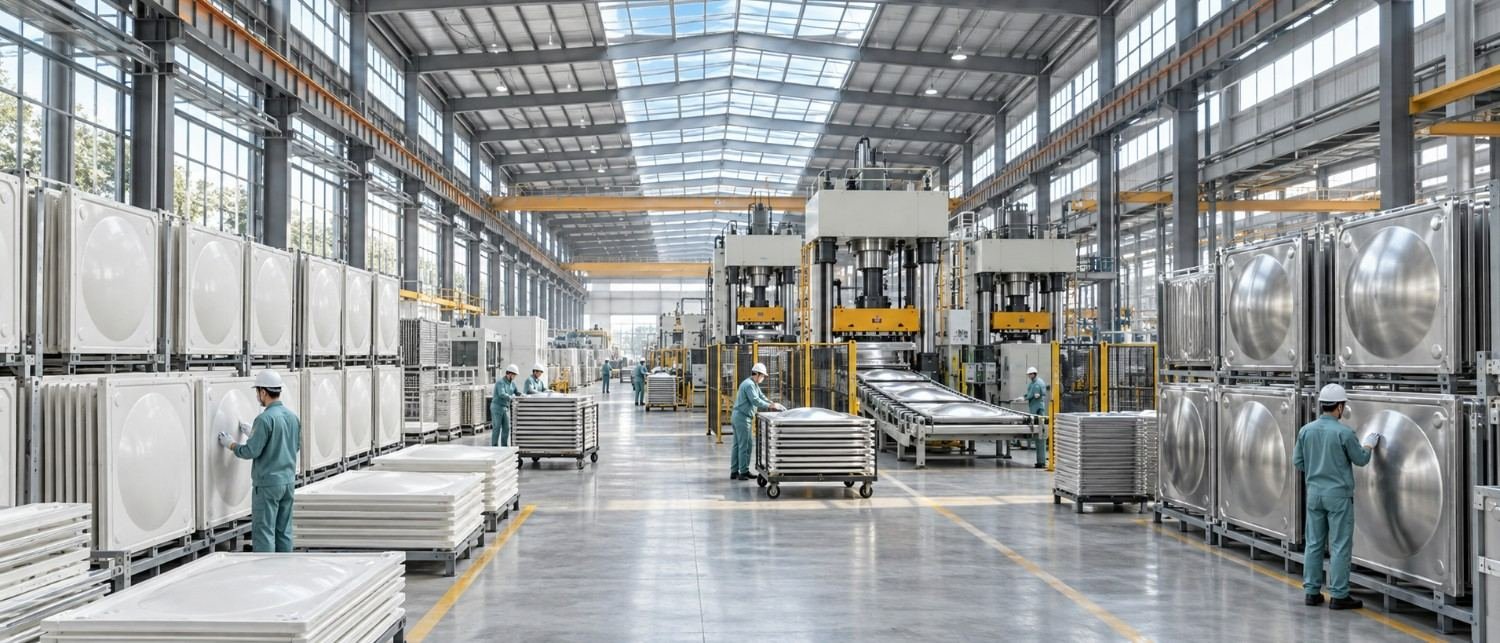
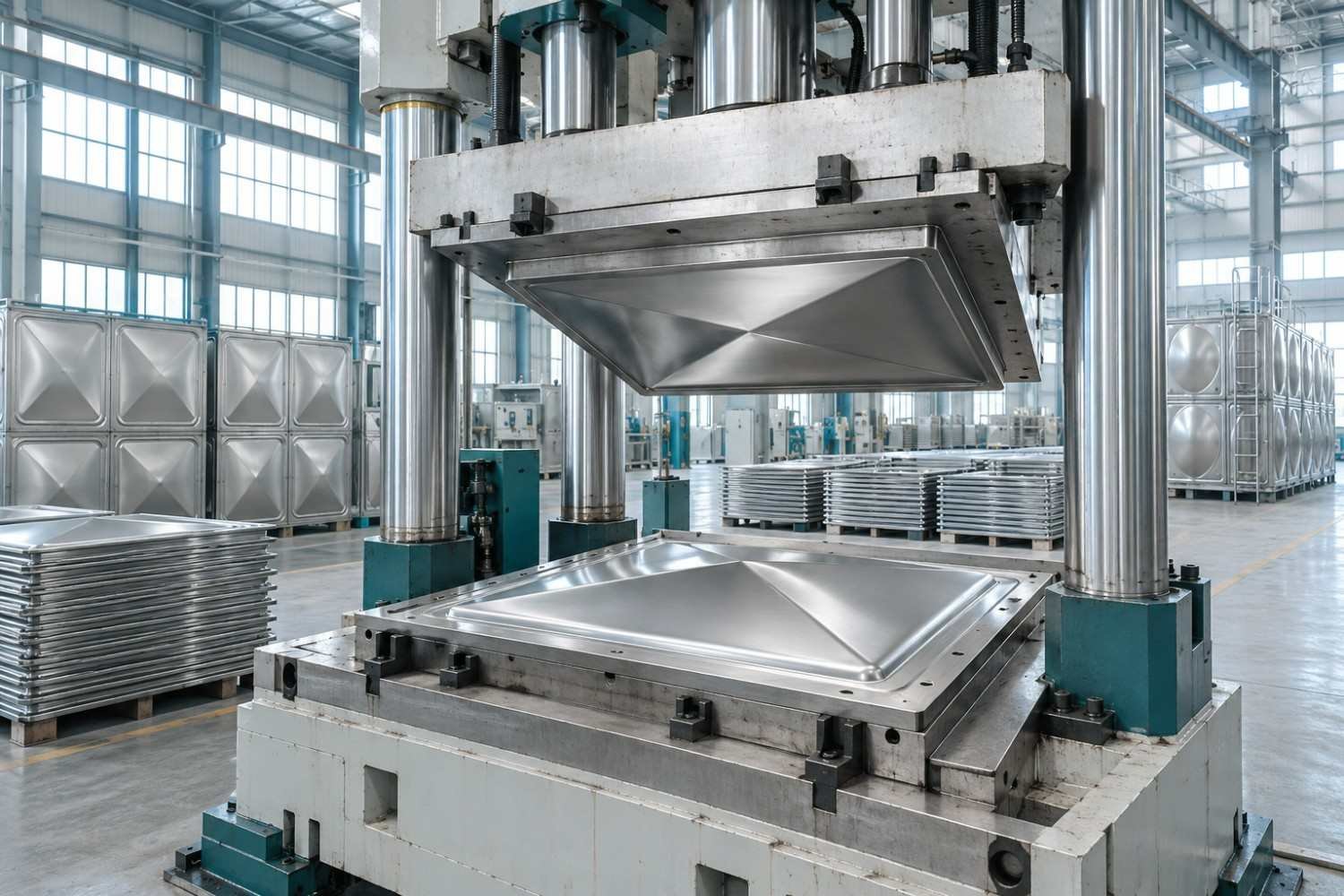
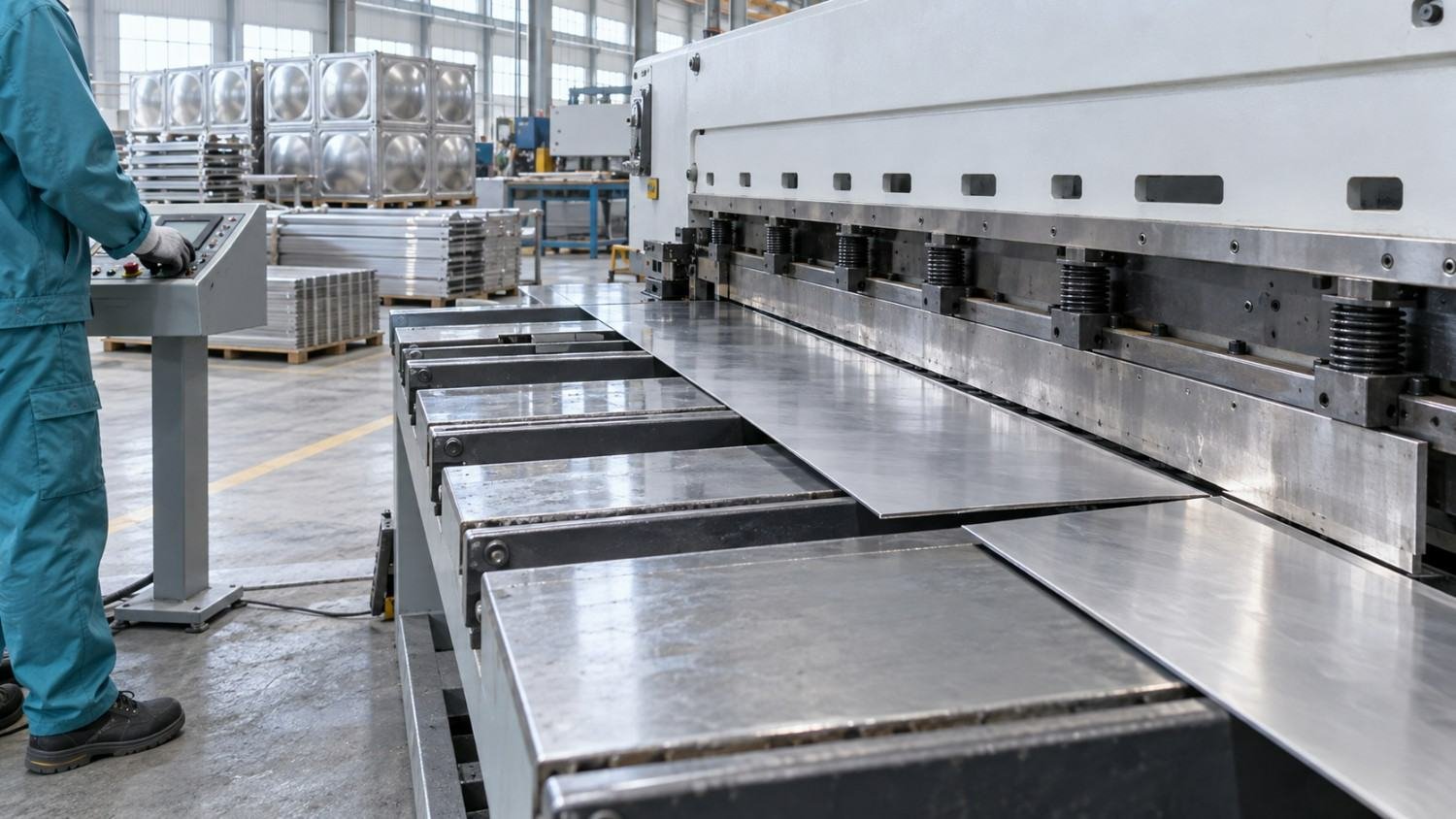
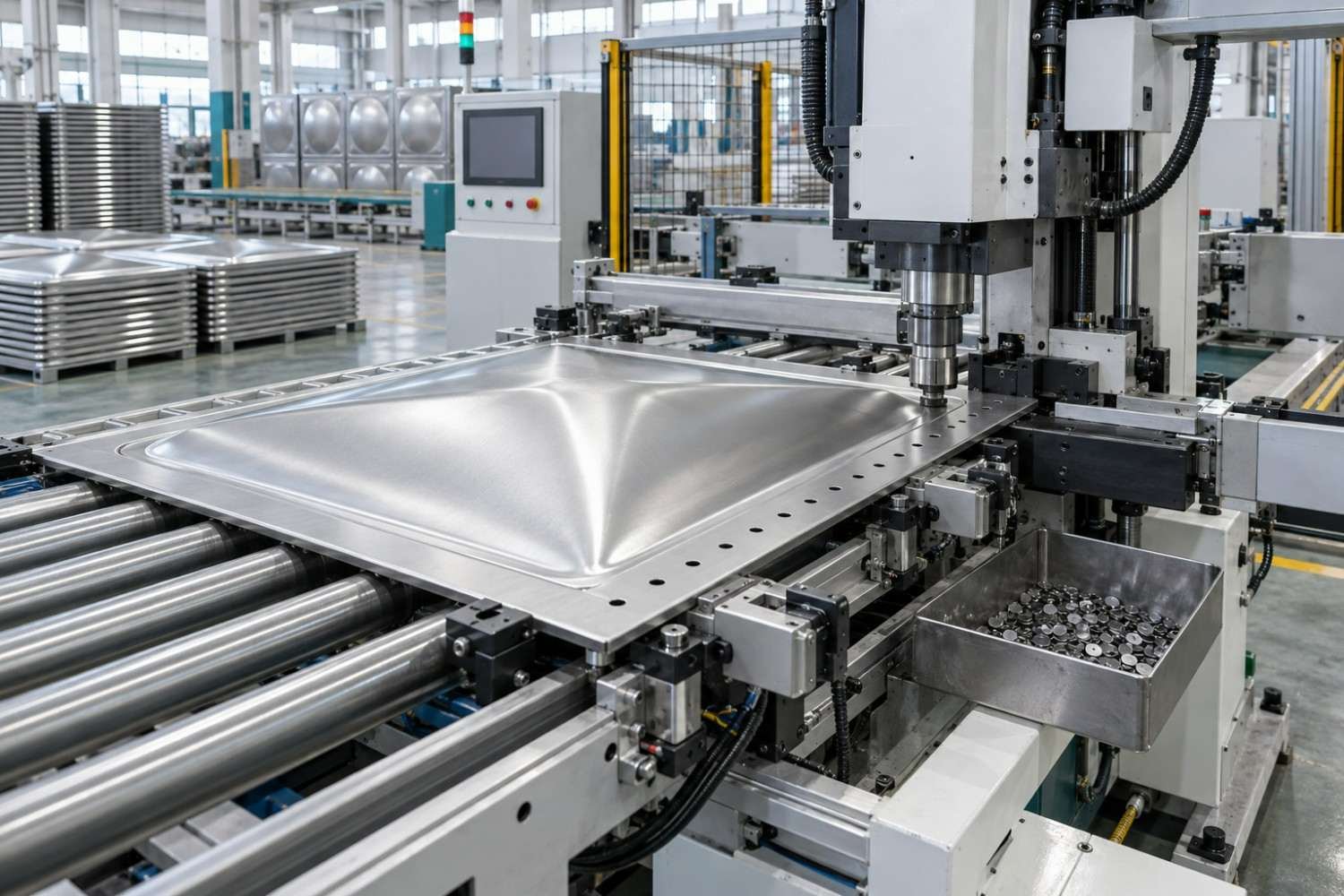
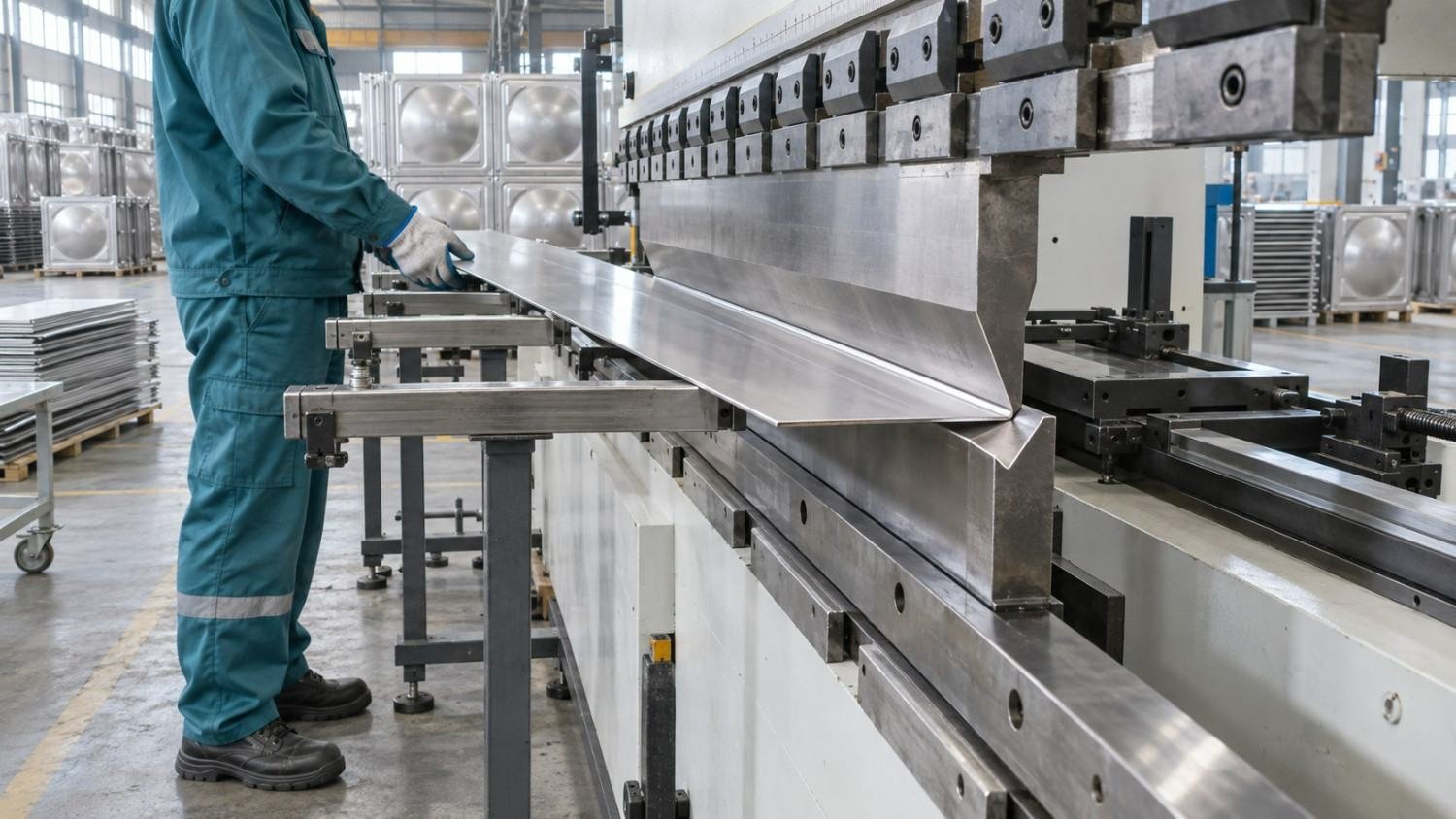
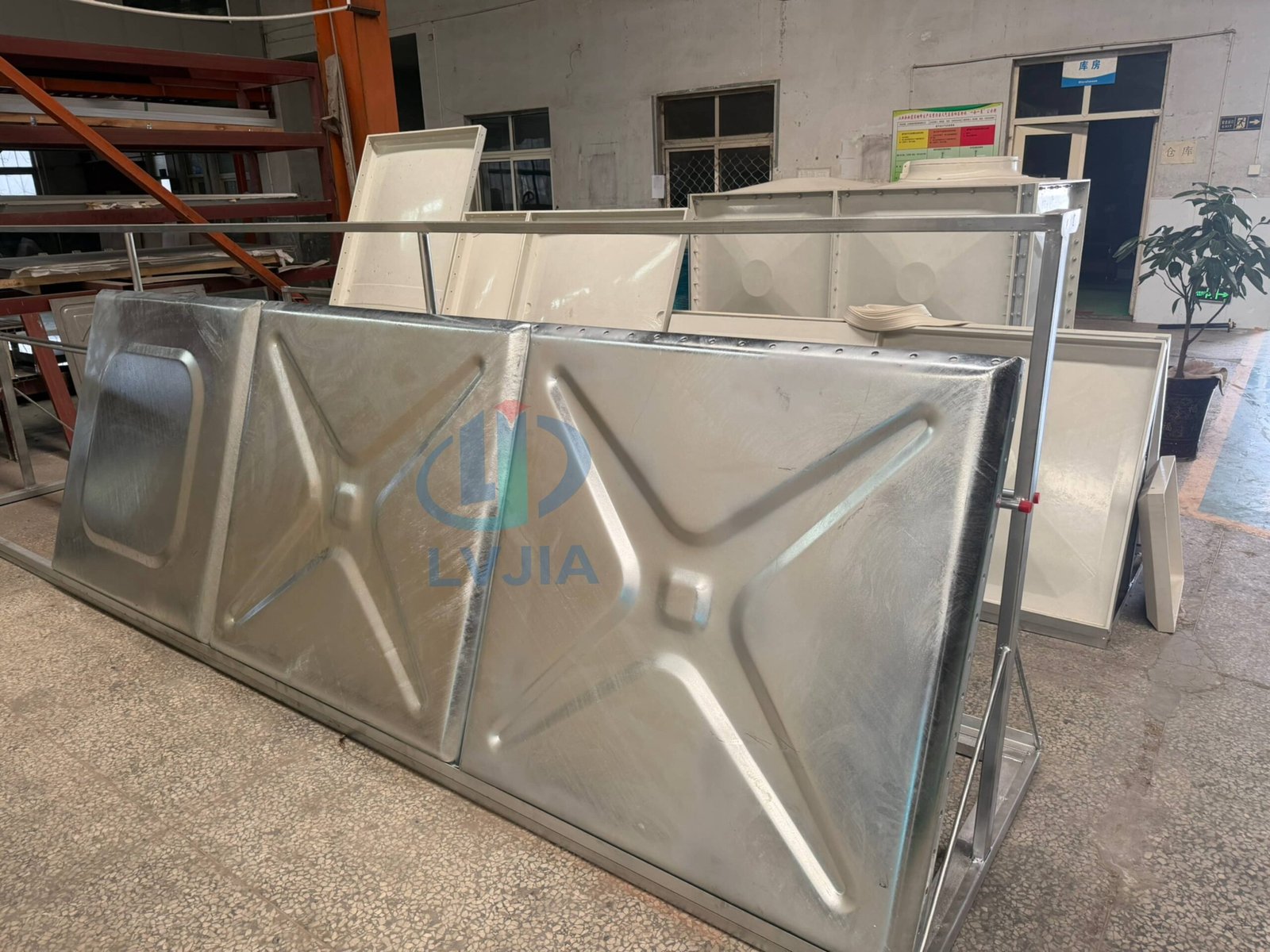
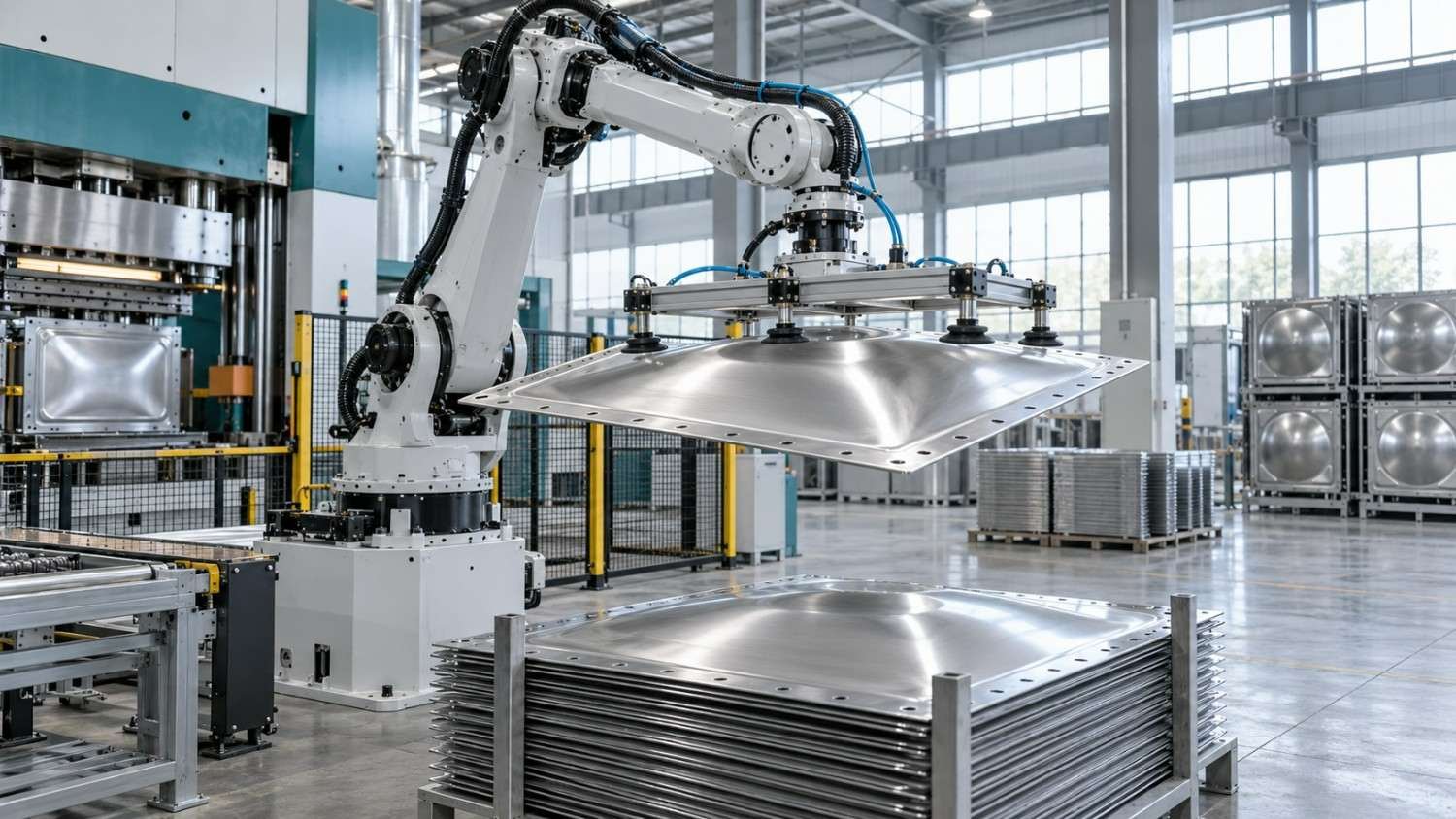
Our 25 machines press, cut, punch and form the panels for every tank we sell, so sizes and hole positions stay the same from one order to the next.
Quality inspection area
Every tank is checked before it ships
Checks start when materials arrive and continue through production. Every finished product is inspected before it’s packed.
Material is checked against its inspection record before it goes into production.
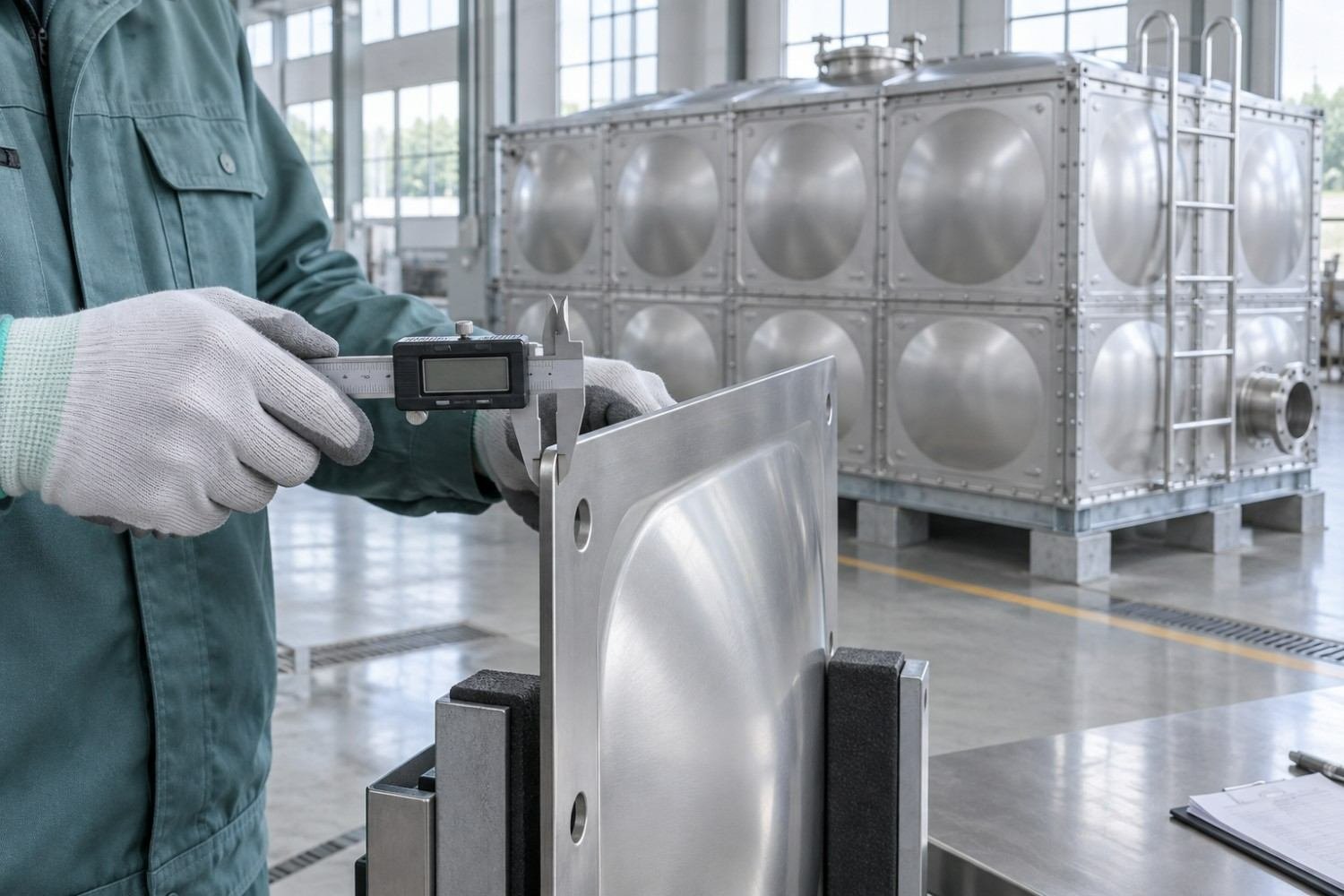
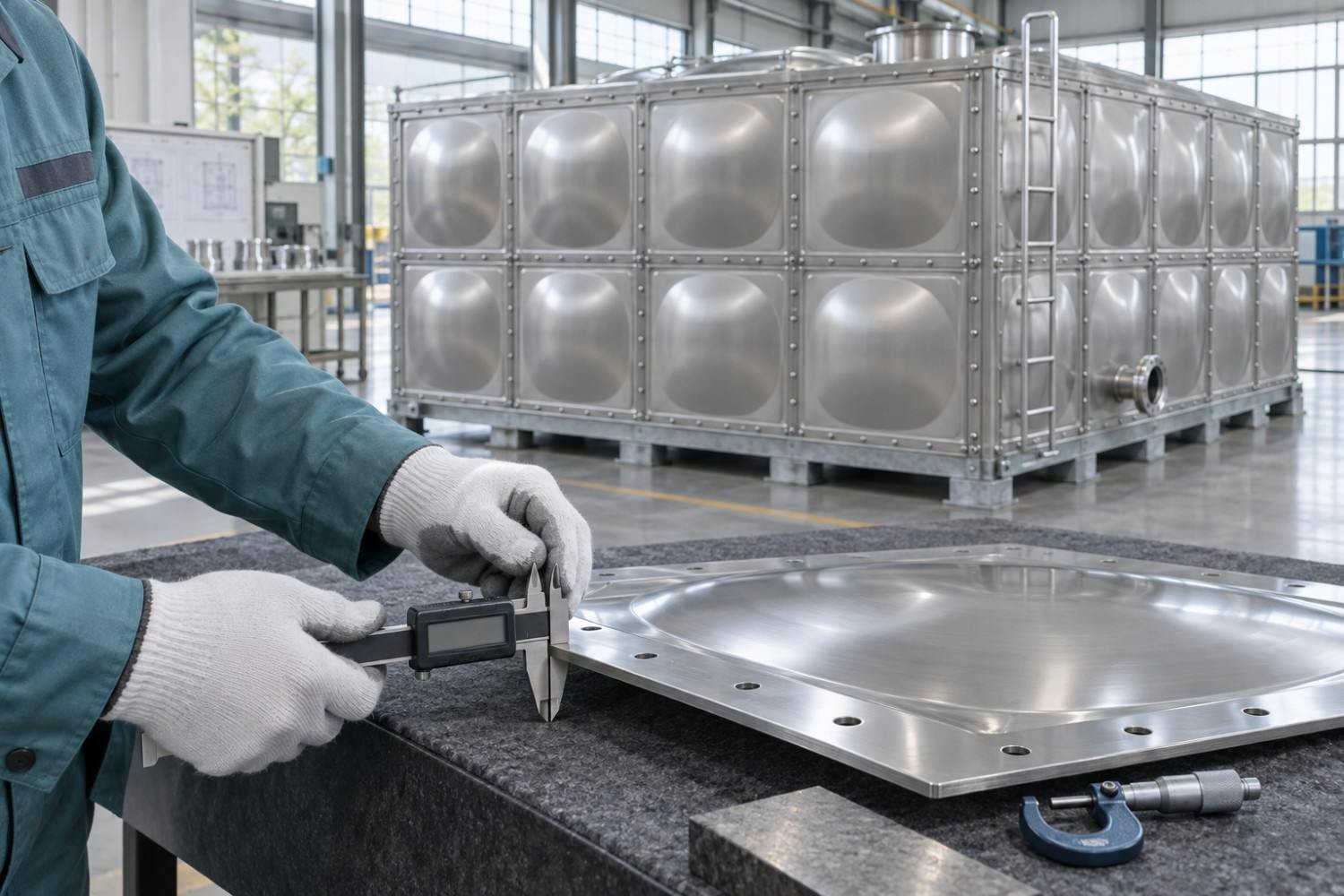
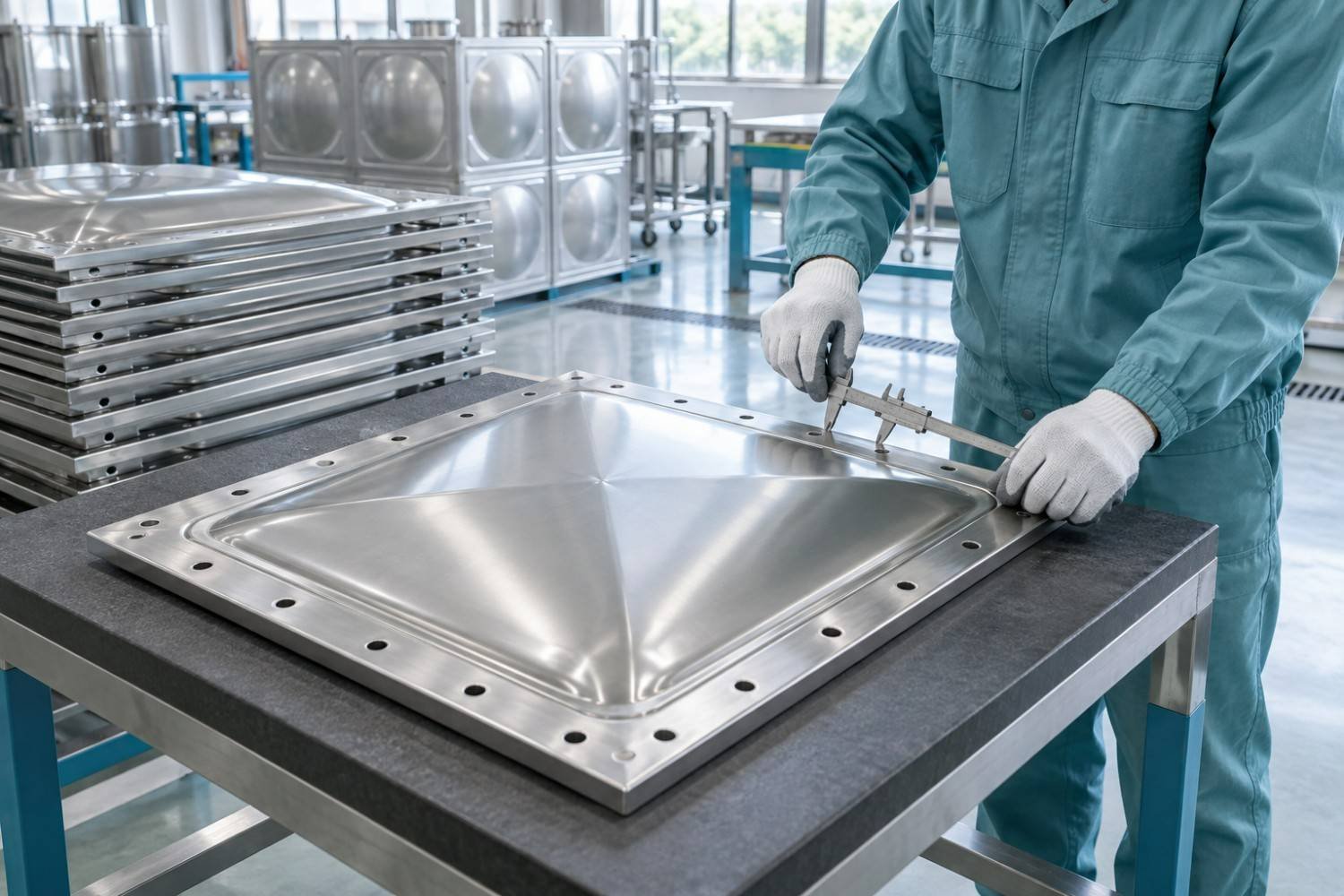
Panel size and hole positions are checked against the drawing for that order.
Stainless welds are checked for finish and leaks before the tank moves on.
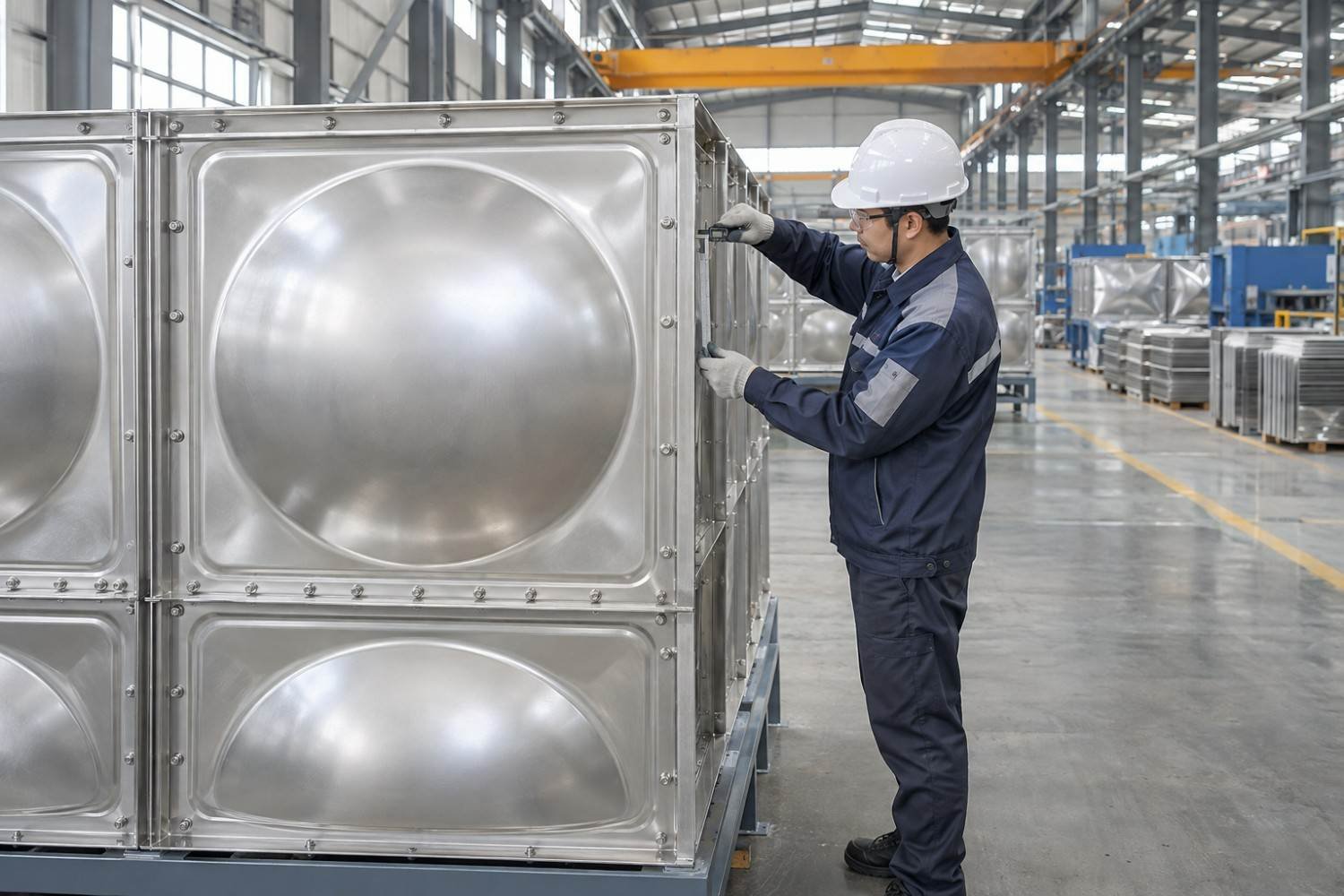
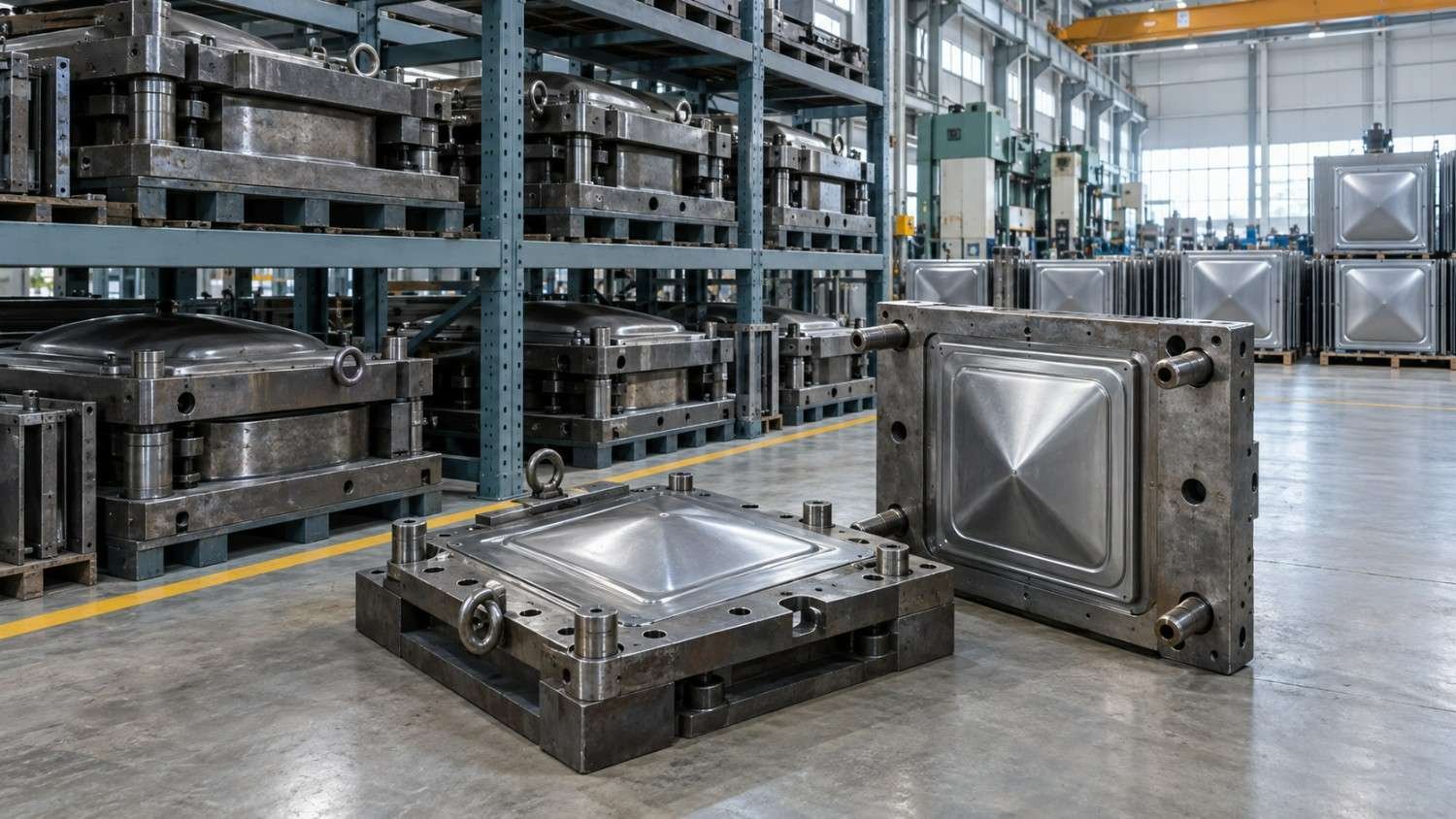
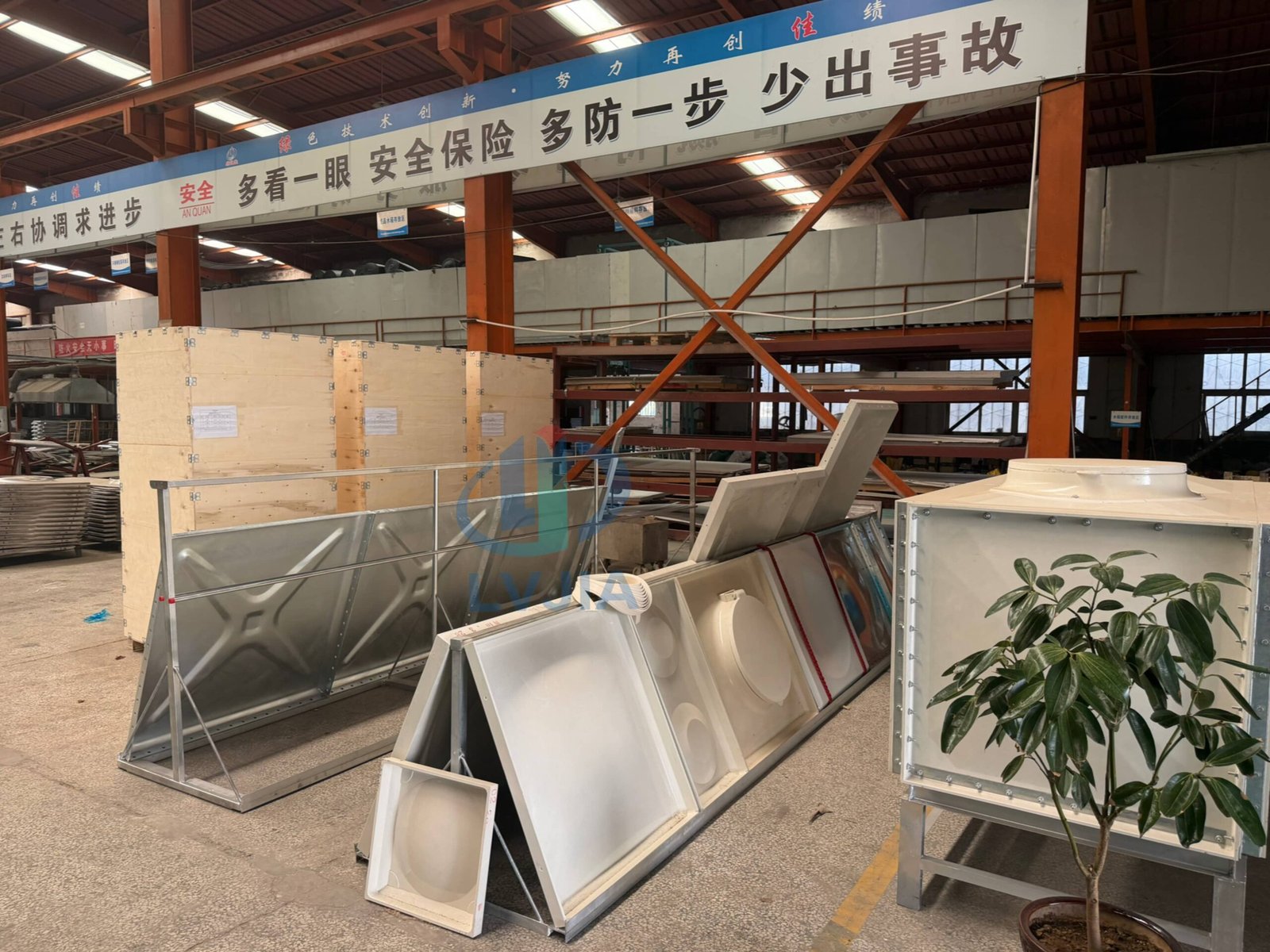
Each finished product is inspected, then packed with its bolts, seals and fittings.
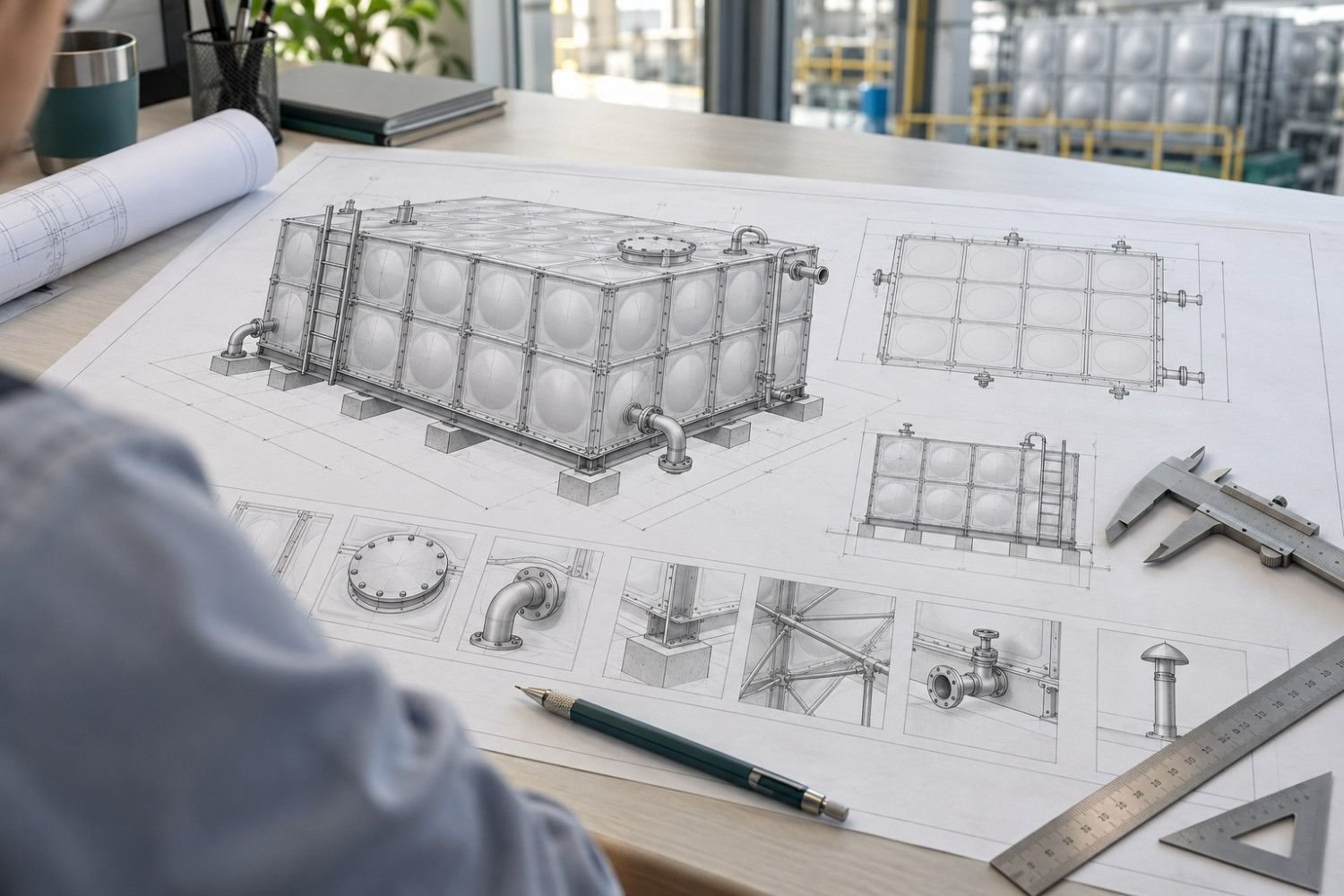
Engineering and R&D area
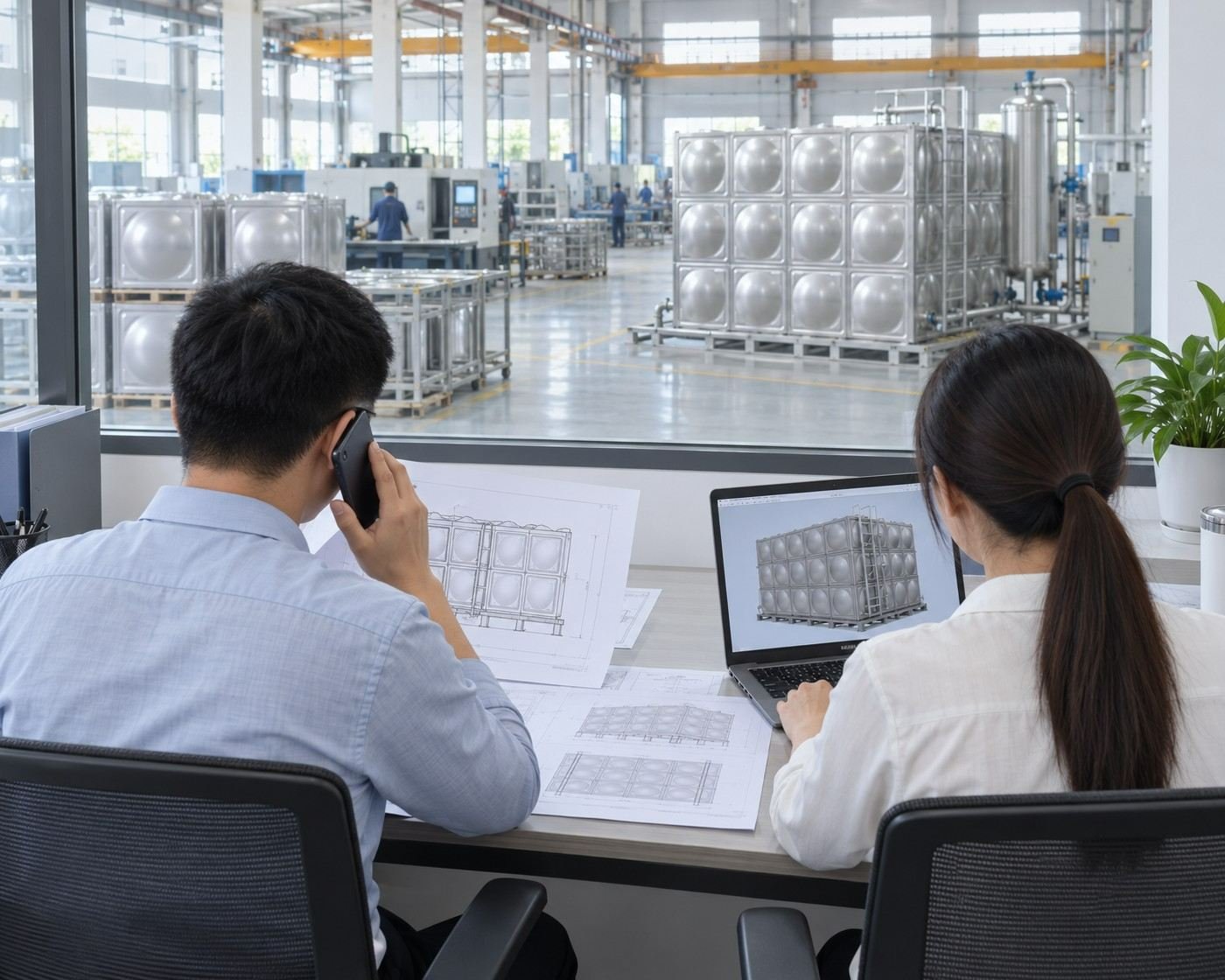
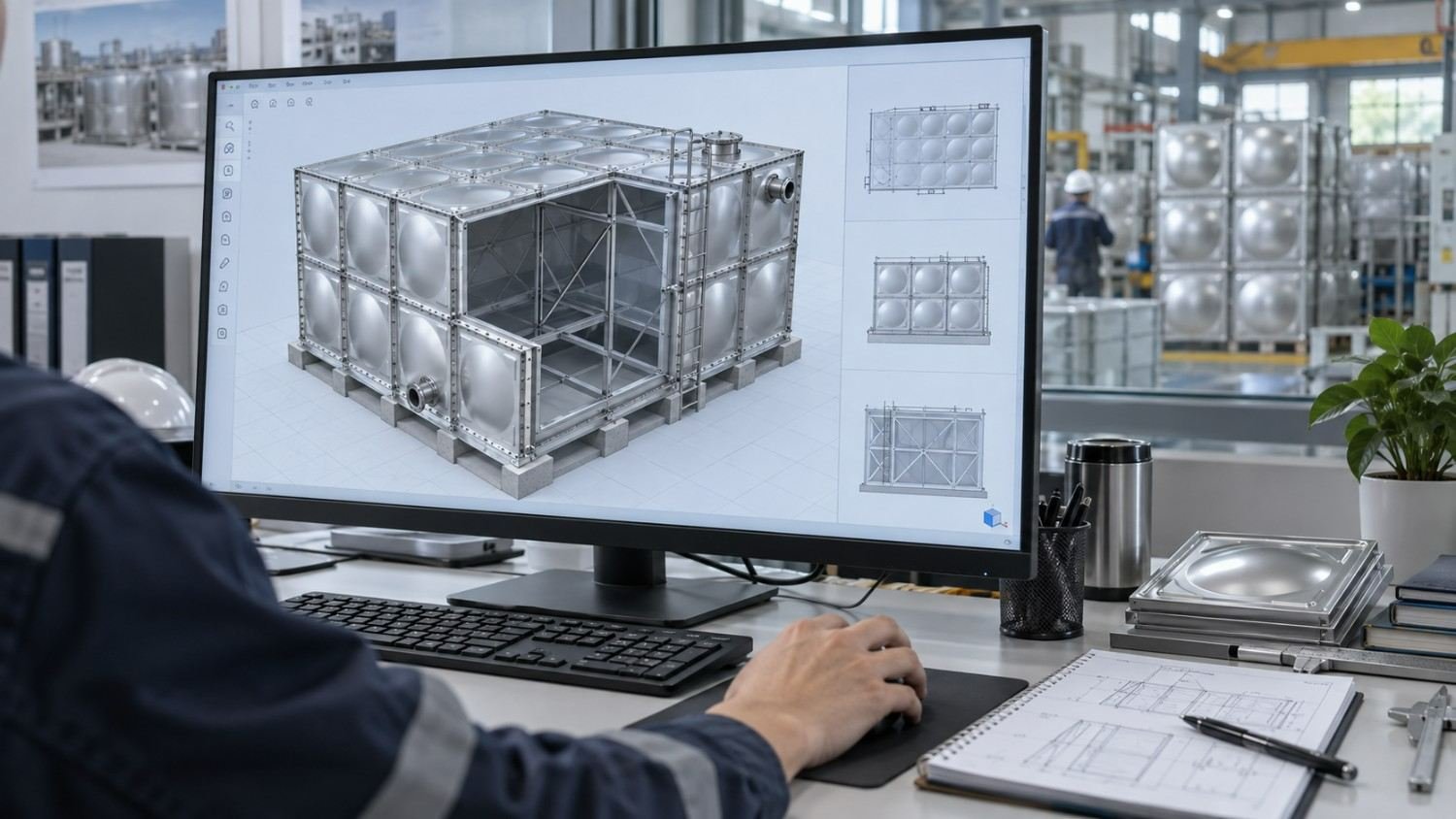
Engineers next to the production line
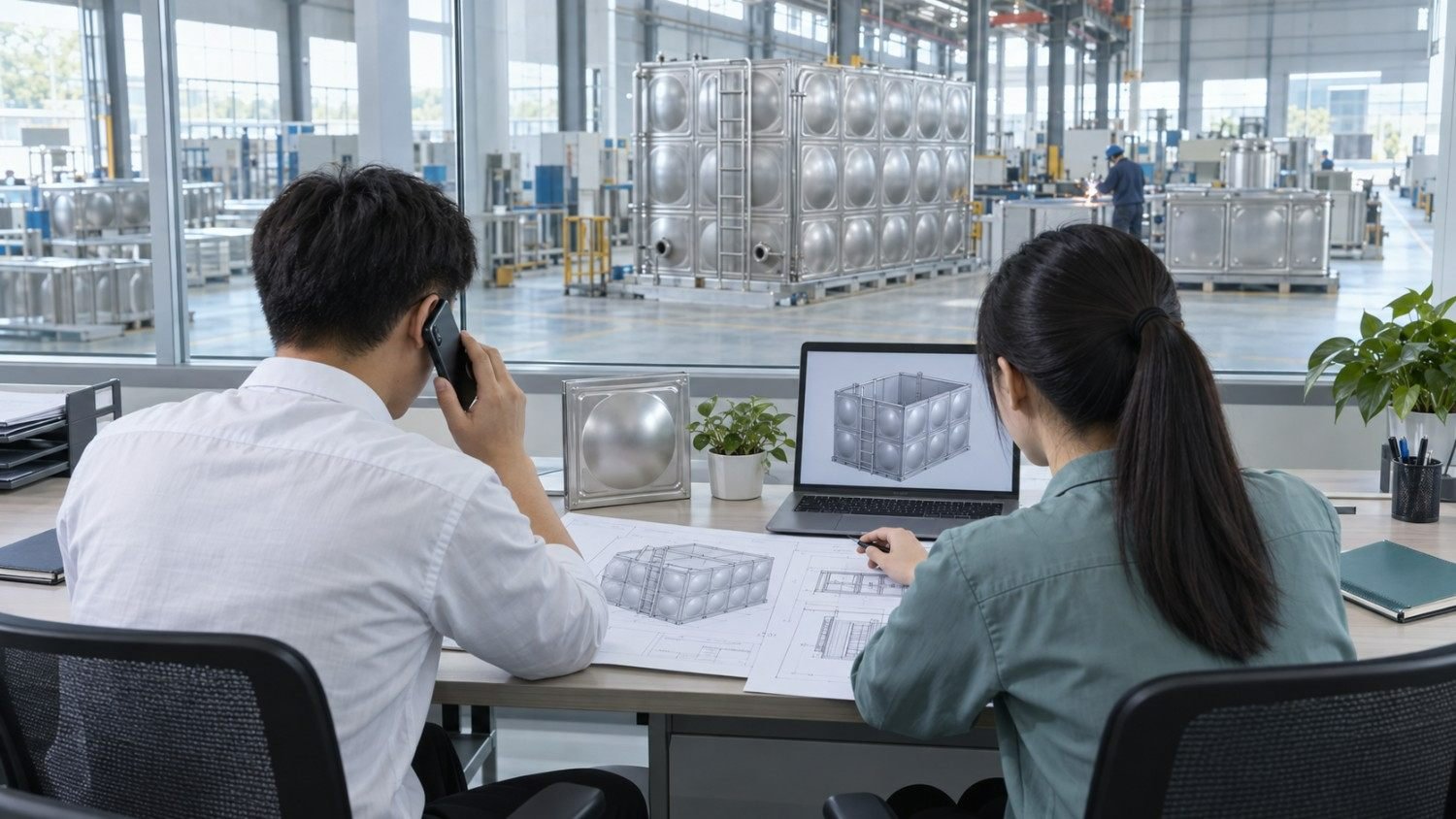
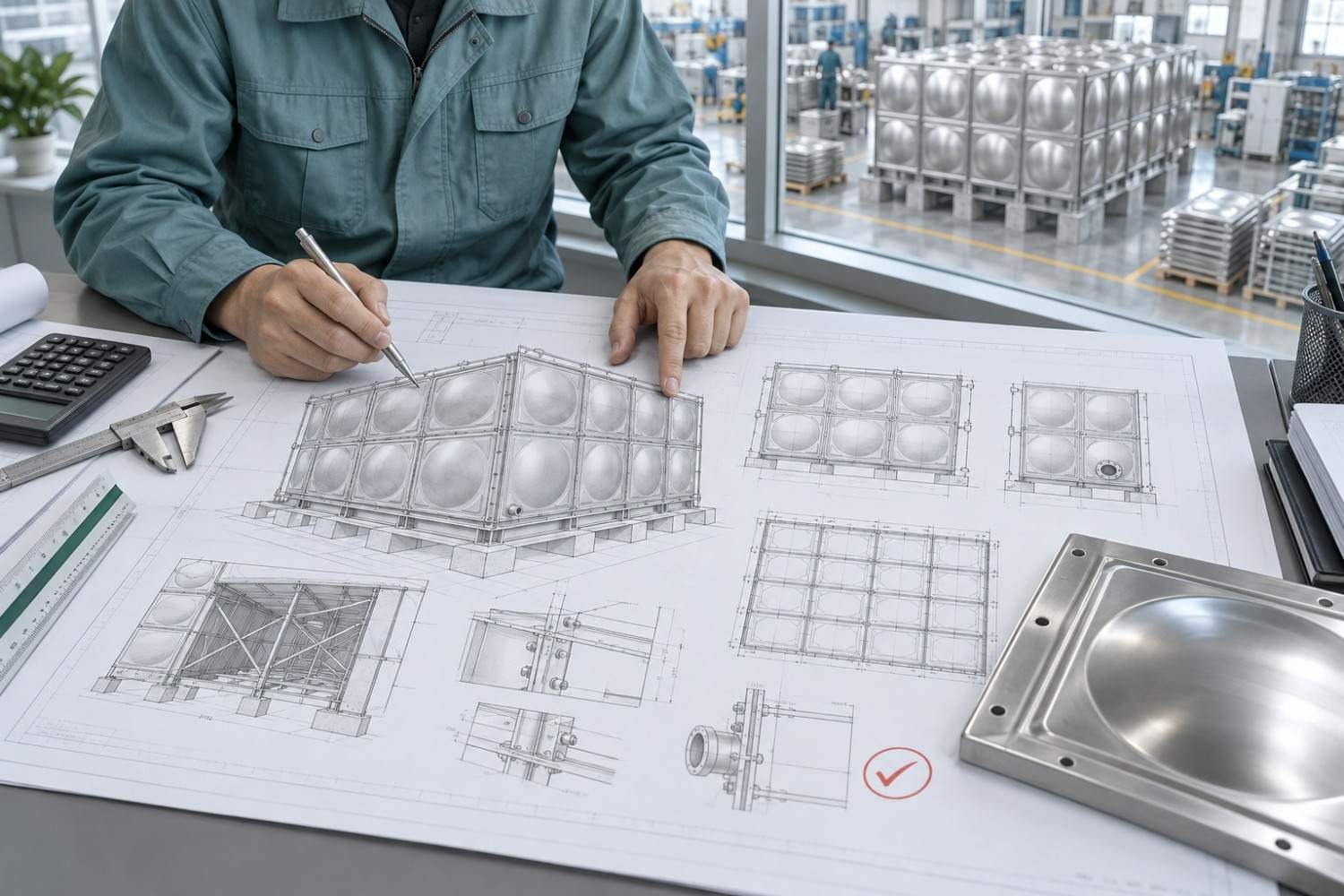
Our engineering office is on the same site as the production lines, so a question about a drawing gets answered at the machine. Custom sizes, partitions and connections are everyday work here.
- 01Engineering workspaceTank layouts, panel counts and connection schedules for each order.
- 02Design capabilitiesDrawing-based and sample-based customization, from small changes to fully custom tanks.
- 03Sample makingSamples are made and checked before bulk production starts.
- 04Product developmentAbout 5 new products and sizes added each year, based on customer requests.
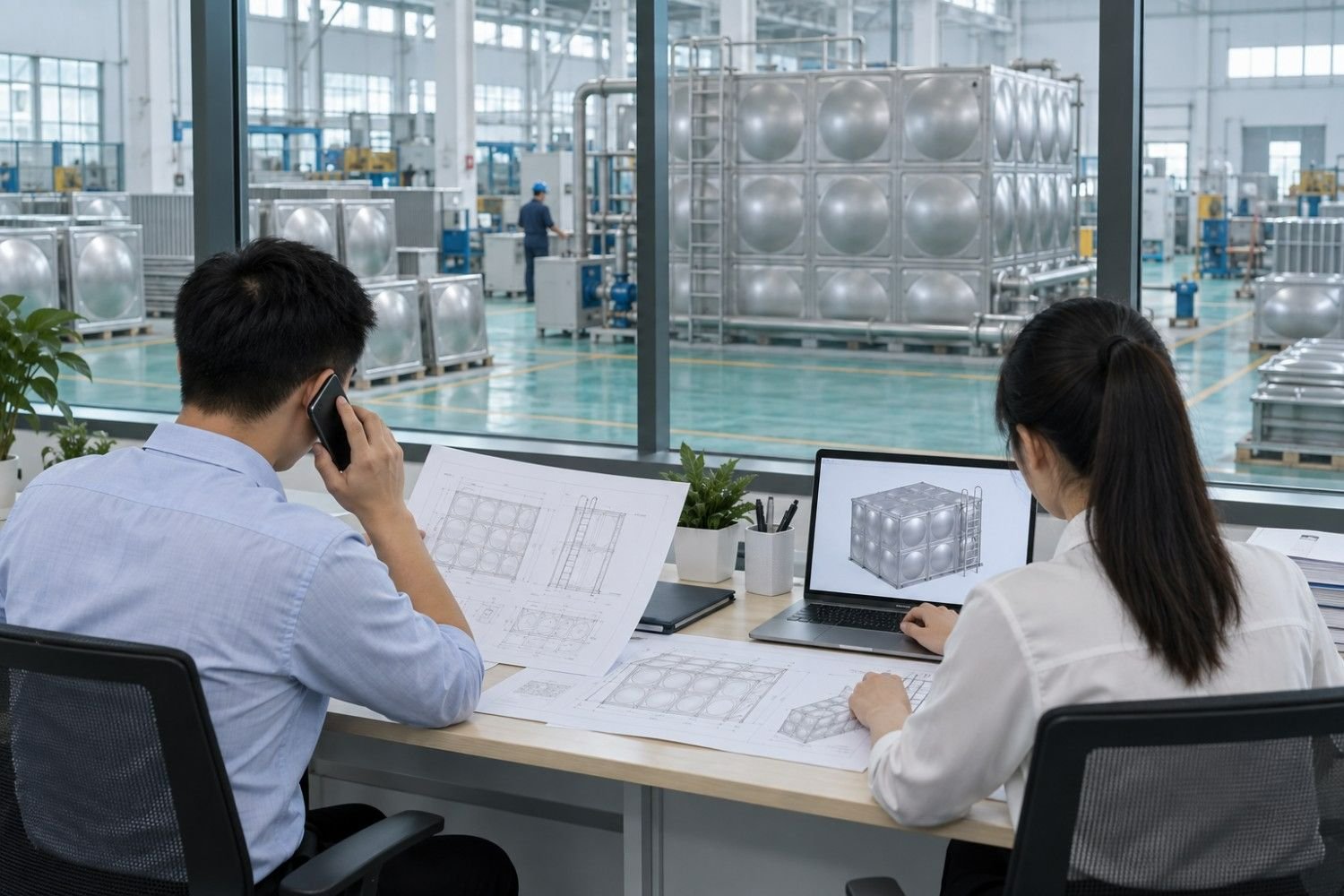
New products developed each year
Where every tank starts as a drawing.
Can’t fly to Dezhou? Walk it from here
Walk through the factory from the raw material area to the container, so you can see how we work before you order or book a flight.
Workflow
From raw material to container in five stages. The steps are the same for a 1 m³ tank and a large sectional reservoir; only the time changes.
Frequently asked questions
Water tank factory in China: visitor and buyer questions
What buyers ask before they book a trip or send an inspector to our water tank factory in China. Short answers, with the same numbers our production team works to.
Where is the LVJIA water tank factory in China?
Luquantun Town Development Zone, Wucheng County, Dezhou City, Shandong Province. Dezhou sits on the Beijing to Shanghai corridor, which is why export orders route out through Tianjin or Qingdao. It is one site: the design office, three production lines, the inspection bay and the packing area are all in the same 11,000 square metre building, and the address on our documents is the address where the tanks are pressed.
How big is the factory and how is it laid out?
11,000 square metres across five areas with one direction of travel. Raw material comes in at receiving, moves through cutting and pressing, then punching and forming, then assembly and inspection, then packing. Material never doubles back, which is what keeps a part from being pressed twice or shipped unchecked. Three production lines run in parallel so a stainless order does not queue behind a galvanized one.
What machines are on the floor?
Around 25, covering hydraulic panel presses, shearing and cutting lines, punching lines, roll forming, argon arc welding stations for stainless, and the hot press used for SMC. The SMC press runs at roughly 145 degrees Celsius and 9 MPa for about nine minutes per panel, which is what gives a GRP panel its finished strength and surface. The equipment list is in the company profile.
Can I visit the water tank factory in person?
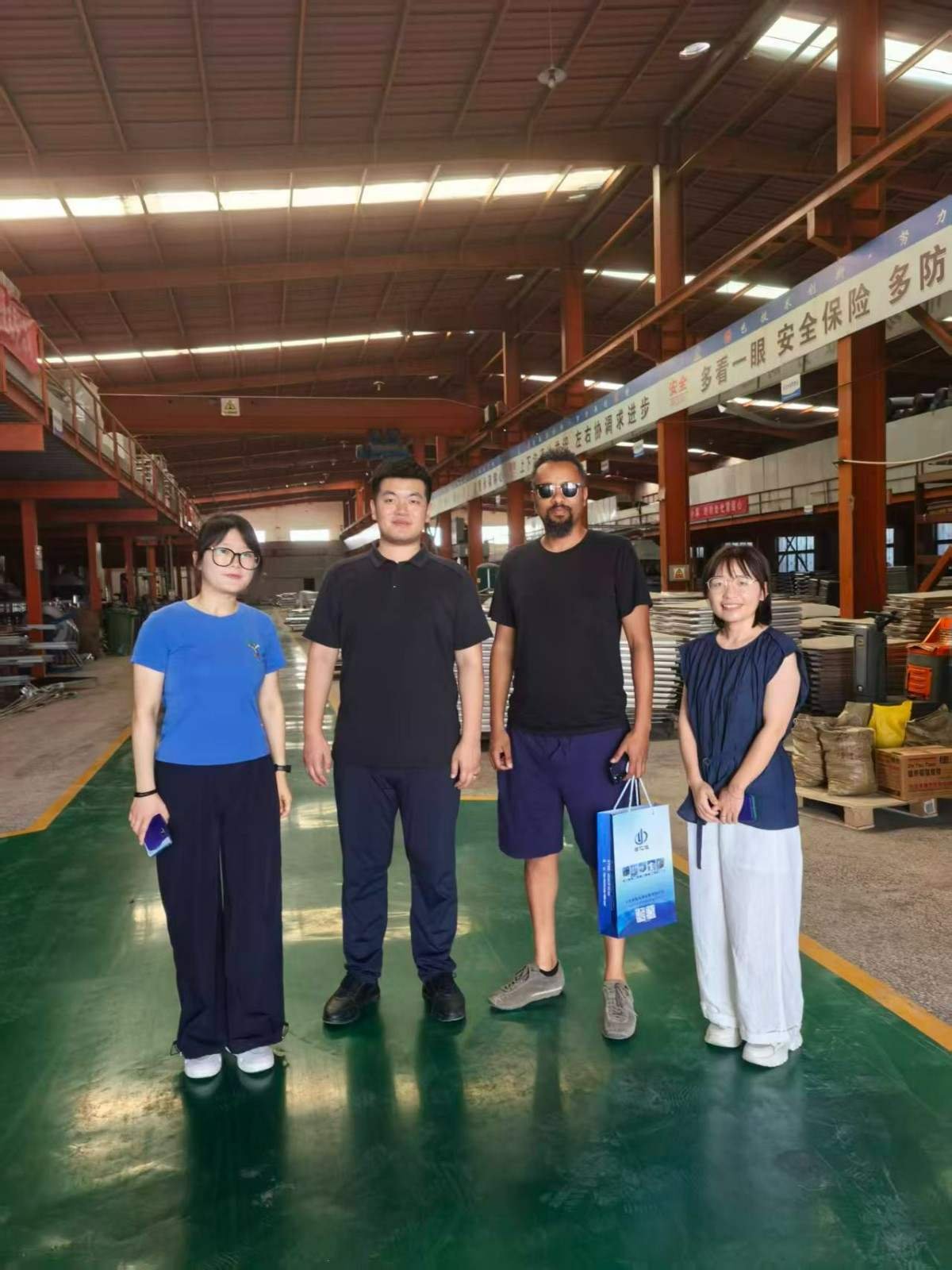
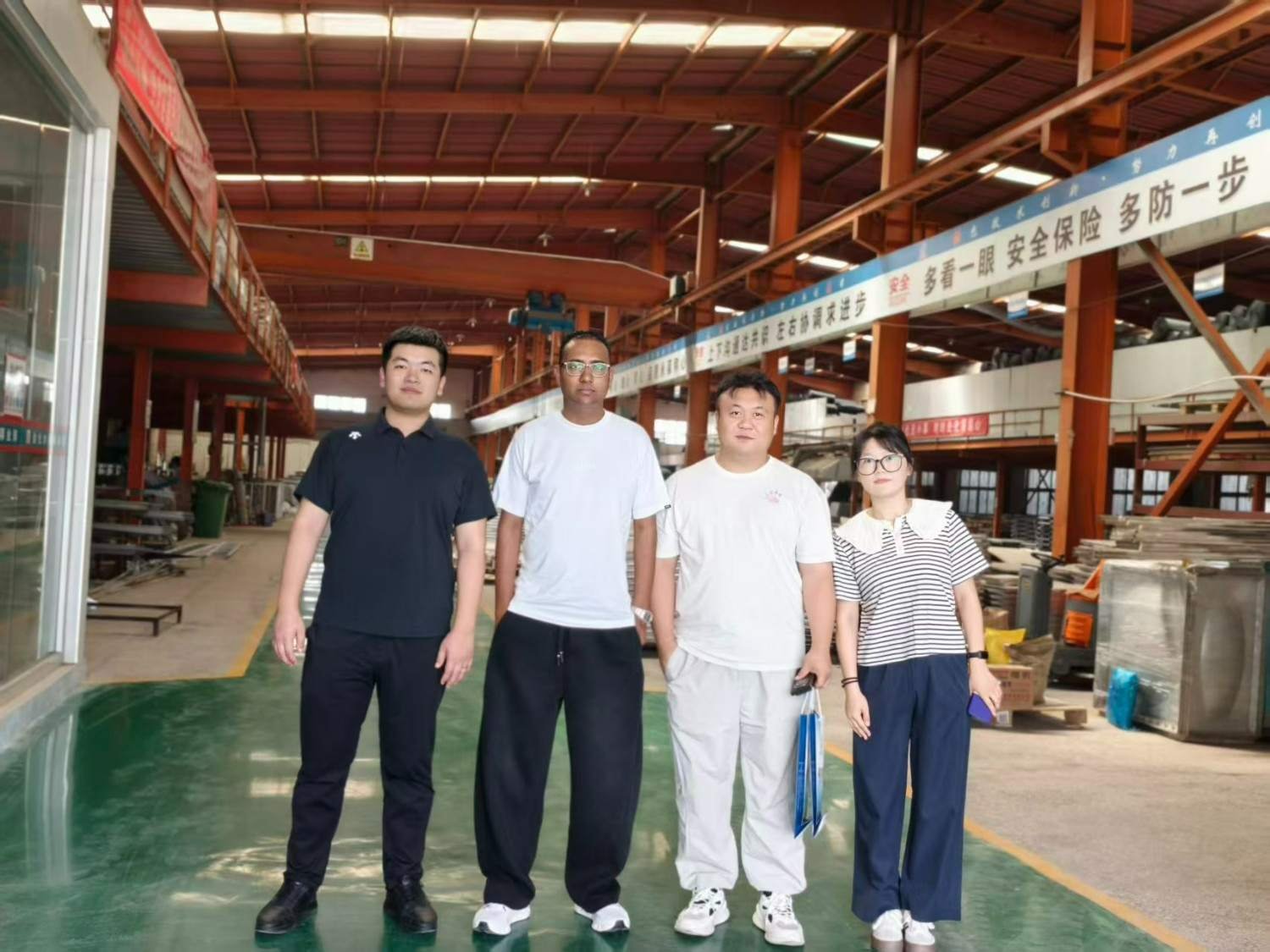
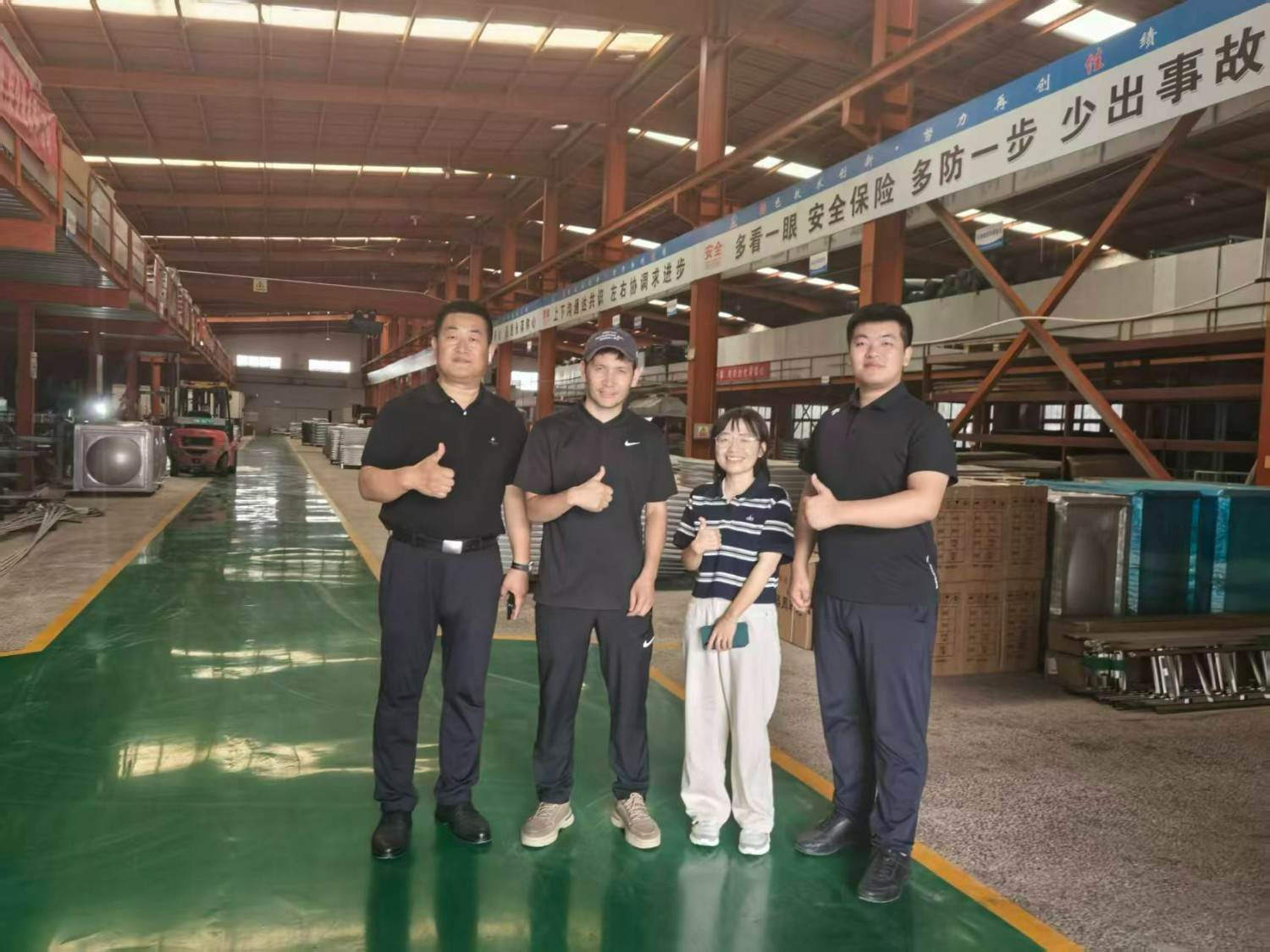
Yes, and buyers do. Tell us roughly when and what you want to see and we will arrange it around the production schedule, because watching a press run is more useful than walking an empty line. Requests go through the form on this page or the contact page. If travel is not practical, this virtual tour follows exactly the same route.
Can I have a third-party inspection instead of visiting?
Yes. Nominate an inspection house and we will write their hold points into the production order. The standard inspection and test plan already covers material receipt, pressing, dimensional check against the approved drawing, assembly and the hydrostatic test before dispatch. Agree witness points before the drawing is approved so they are scheduled rather than squeezed in. ITP templates are on the technical support page.
What happens between my order and the first panel being pressed?
A drawing. Nothing is cut until you have approved a general arrangement showing panel layout, thicknesses by course, nozzle and penetration positions, ladder and manhole placement and plinth centres. That approved drawing becomes the document inspection measures against. It is also the point where changes are cheap; after pressing they are not.
How are tanks tested before they leave?
Every tank is checked against its drawing and then water tested. Panels are measured dimensionally, the assembly is checked for fit, and a hydrostatic test holds water in the tank to prove the joints and gasket compression before it is stripped, dried and packed. The test sheet travels with the tank. A tank that has not been water tested at the factory is a tank you are testing on your own site.
How are the tanks packed for shipping?
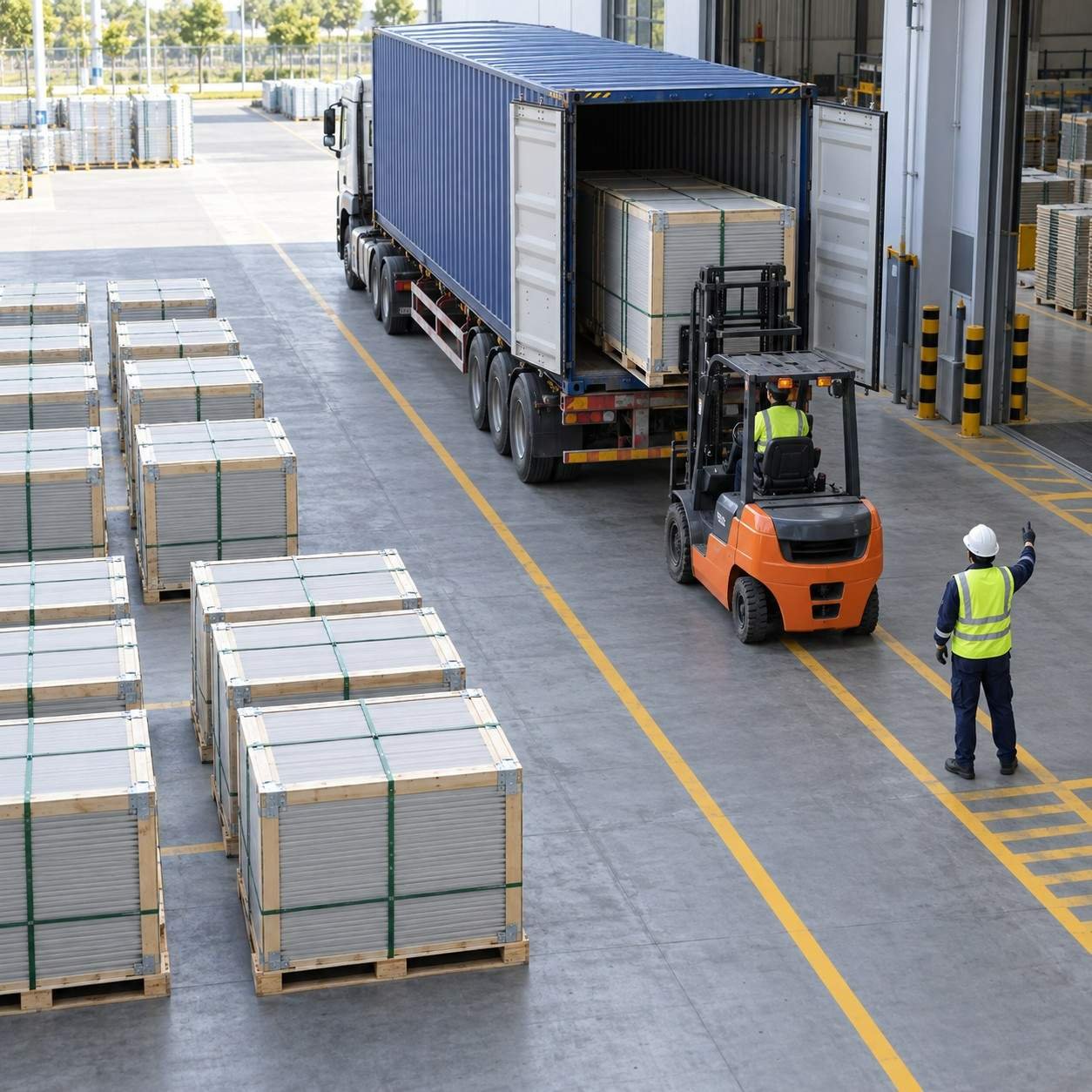
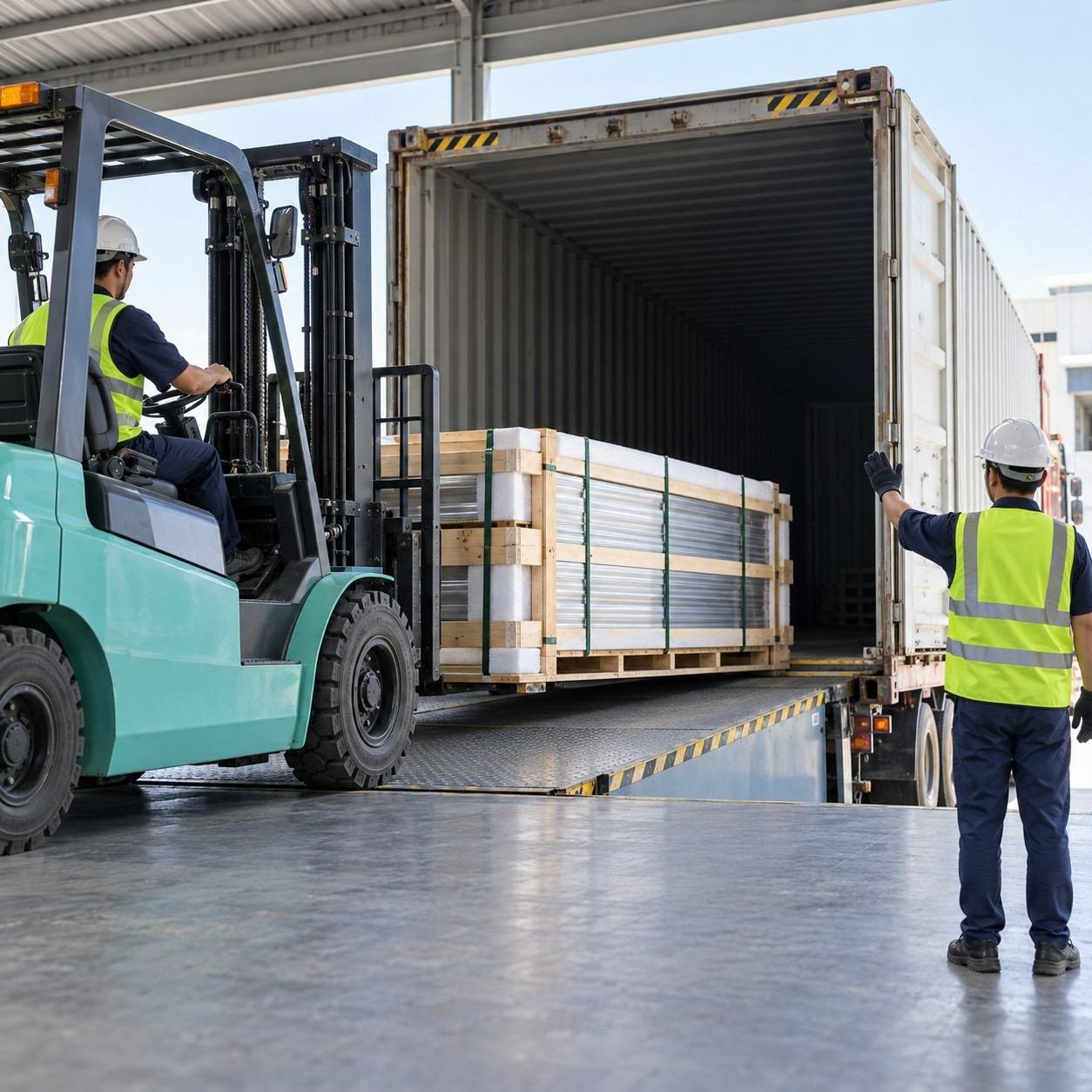
One crate, one tank. Panels, stiffeners, bolts and gaskets are kitted per tank and crated together so nothing arrives as a loose count that has to be reconciled on site. Flat packing is what allowed a 592 cubic metre order to travel in a sensible number of containers, and a twelve-tank village scheme to move in four. Everything ships through Tianjin or Qingdao.
Which tank types are made on these lines?
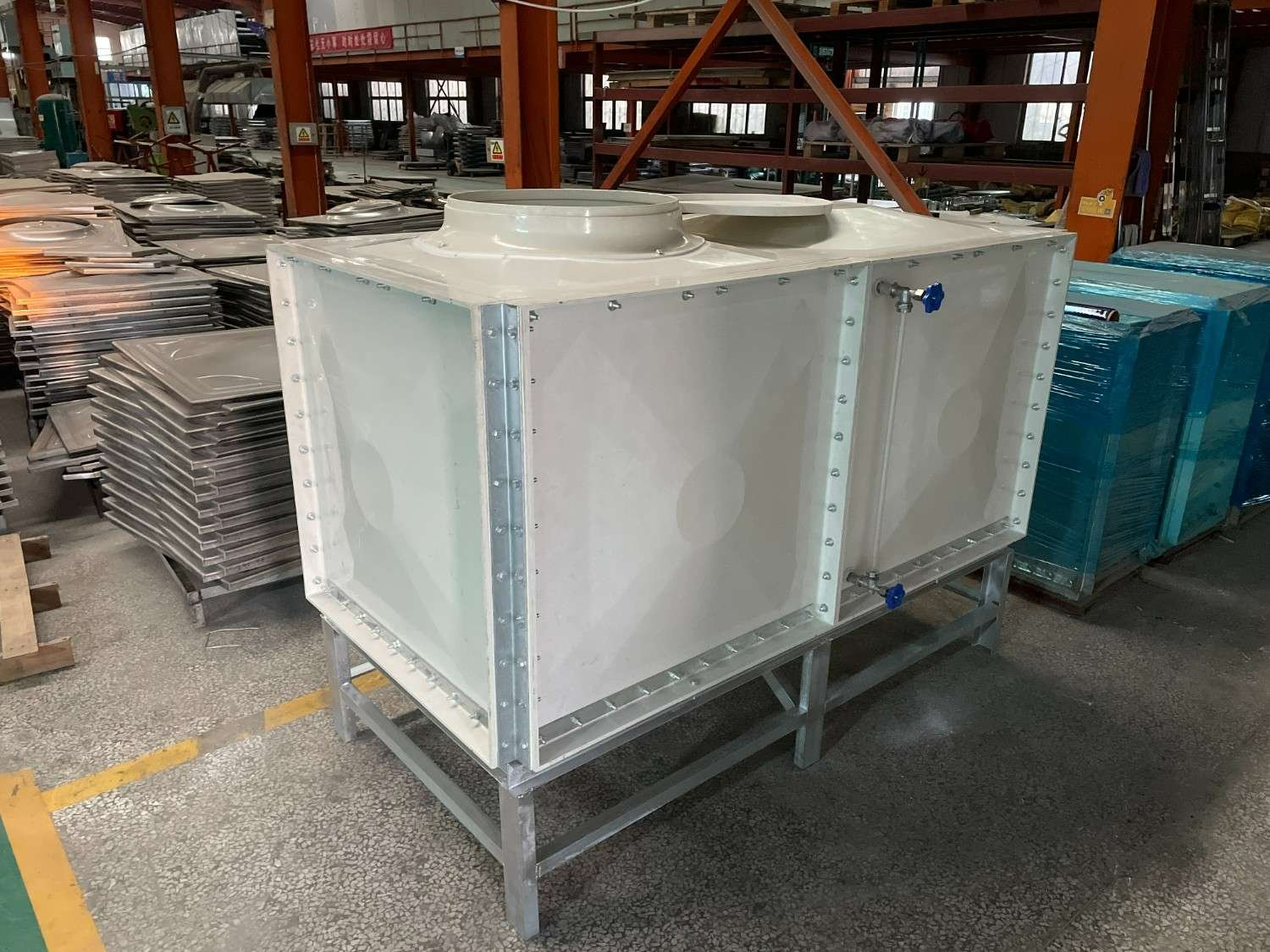
All five: GRP/SMC, stainless steel, hot-dip galvanized, enameled steel and BDF underground. Because they share one building, a project that needs a GRP roof store and a galvanized ground reserve is still one supplier, one drawing set and one shipment.
Is the factory certified?
Yes. ISO 9001 for quality management, ISO 14001 for environmental management and ISO 45001 for occupational health and safety, plus CE to EN 13280:2001 and five GB/T 17219 drinking water contact test reports. An SGS assessment was carried out on site rather than on paper. Every certificate is listed with its number on the certifications page; ISO 9001 is published by ISO.
Do engineers work next to the production line?
They do, and it is deliberate. The design office is on the same site as the workshop, so a question from the floor reaches the person who drew the panel in minutes and a drawing revision reaches the press the same day. It is also why the engineering desk can promise a 2 hour first reply: the people answering are the people building.
Can I see finished tanks from this factory in service?
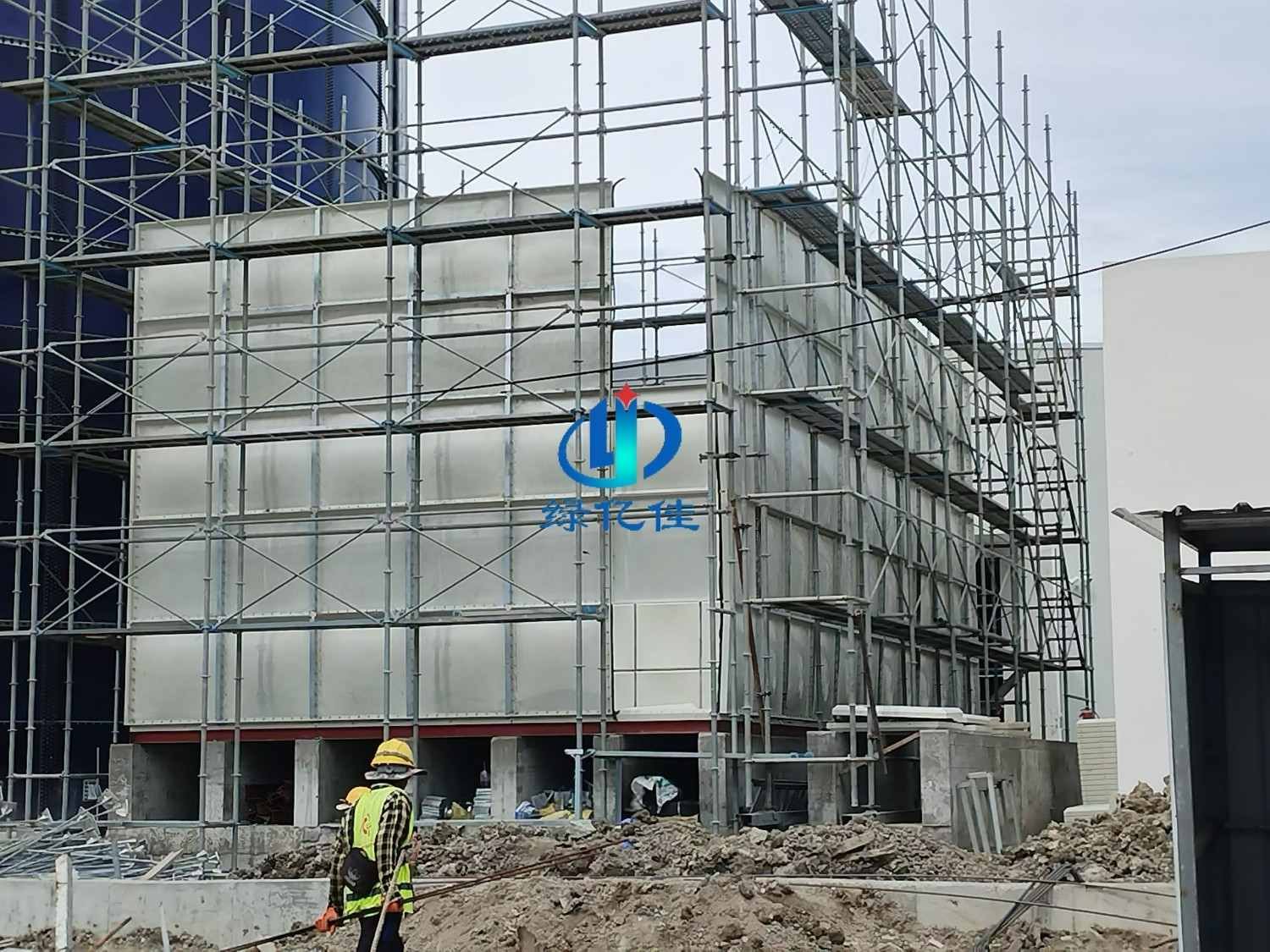
Yes. The case studies cover twelve projects with the duty, the material, the capacity and the result, from a hospital fire reserve assembled in a 2.1 metre plant room to a twelve-tank village scheme. Datasheets and CAD files for every tank type are on the downloads page.
What makes this water tank factory in China different from a trading showroom?
Everything on site is production, not display. The 11,000 square metre building holds three water tank production lines, a design office and an inspection bay, and the address on our certificates is this address. When you visit a water tank factory in China it is worth asking to see a press running and a water tank under hydrostatic test; both happen here on an ordinary working day.
How many water tanks can the factory produce?
Capacity is better measured in panels than in water tanks, because a 5 m3 water tank and a 500 m3 water tank are the same process at different counts. Three lines run in parallel so a stainless water tank order does not queue behind a galvanized one, and roughly 25 machines cover pressing, cutting, punching, forming and welding. Tell us your quantity and delivery date and we will answer against the actual schedule.
What happens in each of the five areas?
Receiving checks incoming material against its certificate. Cutting and pressing forms the water tank panels, with the SMC press running at about 145 degrees Celsius and 9 MPa for roughly nine minutes. Punching and forming adds the bolt pattern and penetrations. Assembly and inspection trial-builds and water tests the water tank. Packing crates it, one crate per water tank, for shipping through Tianjin or Qingdao.
Can I watch my own water tank being built?
Yes, if the timing works. Tell us when you can travel and we will schedule your water tank into that window where the production plan allows, so you see your own panels rather than someone else. If you cannot travel, we can send progress photographs at the hold points written into your inspection and test plan, agreed through technical support before the drawing is approved.
Does the factory hold material in stock?
Common panel materials and standard fasteners are held so a straightforward water tank does not wait on procurement. Special grades, such as 316L for a high-chloride duty, are ordered against the job with their mill certificates. Purchasing sits in the same building as production, so a material query does not bounce between offices before it reaches the person who can answer it.
What happens if an inspection finds a problem?
The water tank stops. Quality control reports separately from production and can hold a batch, so a non-conformance is recorded against the batch number the material arrived under and the panel is re-made rather than passed along. You are told if it affects your delivery date; you are not told afterwards.
Which water tanks come off these production lines?
Five ranges share the three lines: GRP/FRP/SMC, stainless steel, hot-dip galvanized, enameled steel and BDF underground water tanks, 13 models in each. The tour follows a GRP panel through the building, but a stainless or galvanized water tank takes the same route with a different press and finishing step. See all 65 models in the full catalogue.
Visit and inquiry
Come and see it, or send us the spec
Buyers are welcome at our factory in Wucheng County, Dezhou, and we’ll help plan your trip. If you can’t travel, send us the drawing or the capacity, and our engineers will reply with a layout.
Request a factory visit
Tell us your dates and what you want to see, such as the press line, the inspection area or a tank like yours in production.
Book a visitManufacturing inquiry
Questions about capacity, materials, lead time or a non-standard size, answered by the team that plans production.
Ask the factoryRequest a quotation
Send the capacity, site limits and delivery date. You’ll get a priced specification with a drawing.
Get a quotationFactory visit
Book a visit to our Dezhou factory
Tell us who is coming and what you want to see. We will confirm the date, help with travel from Dezhou or Jinan, and plan the day around your project.
Sent straight to our sales team. We aim to reply within 2 hours, in English or Chinese.
Request sent
Your request is on its way to LVJIA. We will confirm your visit by email, usually within 2 hours during working time.